Key takeaways
- Two verified cast iron pellet stoves with automatic ignition, compared by heating area, hopper size, smart controller modes and footprint.
Disclosure: As an Amazon Associate, we earn from qualifying purchases.
Our top pick: Castle Serenity 12327. Runner-up: Castle 41278 Serenity.
A cast iron pellet stove with automatic ignition has to satisfy three requirements at once: a body built from cast iron rather than plain sheet steel, an igniter that lights the pellets on its own instead of relying on gel and a match, and a controller that can run the stove to a schedule or a thermostat setting without constant attention. When the Amazon US listings were checked for this guide, only two stoves met all three requirements with a verified listing: the Castle Serenity 12327 and the newer Castle 41278 Serenity. Both come from the same Serenity line, both carry a cast iron body in their listing attributes, and both pair automatic ignition with a smart controller. This guide covers only those two verified models rather than padding the list with steel-bodied stoves that happen to share a showroom category. Where a figure comes from a listing, it is stated as a listing figure, and the cast iron attribution itself rests on the Serenity line’s listing attributes, so it is worth confirming the body material on the product page again before ordering.
Quick Picks
- Castle Serenity 12327 — Best documented pick: the fuller specification record of the two, with a stated output figure, dimensions and weight, a 40 lb hopper and four controller modes.
- Castle 41278 Serenity — Best for buyers who want the newer model: the updated Serenity with the same 40 lb hopper and 1,500 sq ft heating rating, a smart controller with Eco mode and automatic ignition.
Castle Serenity 12327
OUR TOP PICK
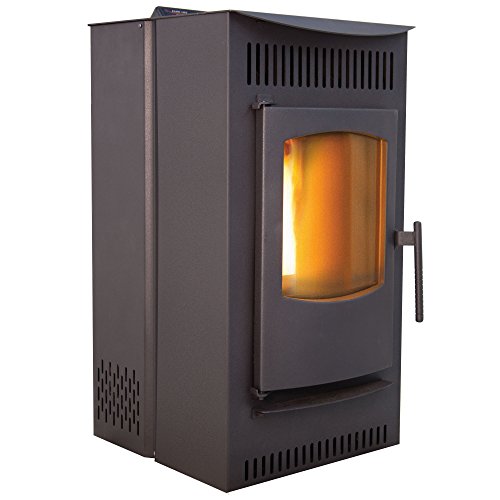
The Castle Serenity 12327 is the established model in the Serenity line and the stove with the more complete record in this guide. As stated on the Amazon listing, it heats up to 1,500 sq ft and carries a 40 lb hopper, so it is sized for a main living space, an open-plan floor or a workshop that needs steady background heat rather than a small occasional room. Its stated output is around 31,000 BTU, which sits in the middle of the freestanding pellet stove class: enough for the rated area in a reasonably insulated building, without the physical size of the largest stoves in the category.
The automatic ignition is central to how this stove is meant to be used. Instead of lighting a handful of pellets by hand each time the stove starts, the igniter brings the fire up when the controller calls for heat, and the smart controller then manages the burn. As stated for the Serenity line, the controller runs in manual, weekly, thermostat and eco modes. Manual mode holds a chosen heat level. Weekly mode follows a programmed schedule across the week, which suits a stove that should be warm before the household is up and idle while the house is empty. Thermostat mode works with the room temperature, starting and stopping the fire as the set point is reached and lost. Eco mode trims the burn back to hold a lower, steadier output. Together, automatic ignition and those four modes are what separate this kind of stove from a basic model that has to be lit, watched and shut down by hand.
The physical details matter for placement. As stated on the listing, the 12327 measures 18.25 inches wide, 34 inches high and 23.75 inches deep, and weighs 186 lb. That is a compact footprint for a stove of this output, and it helps in a room where the hearth area is limited, but the weight means the stove should be positioned once and levelled carefully rather than moved around afterwards. The cast iron body recorded in the listing attributes is also part of the placement decision: cast iron holds heat and gives it back gradually, so the stove continues to radiate after the burn eases, and the body is heavier and more substantial than a thin steel cabinet of the same size. The 40 lb hopper takes a standard bag of pellets in a single fill, which keeps refuelling to a simple routine instead of partial bags stored beside the stove.
Living with the stove day to day is mostly a matter of ash and glass. Pellet stoves of this type need the burn pot checked regularly, the ash drawn out on a schedule set by how hard the stove is run, and the viewing glass wiped if a clear view of the flame matters. None of that is unusual for the category, and the Serenity’s controller reduces the other half of the workload, the constant adjustment of the fire itself. Choose the 12327 when the space to be heated is close to its 1,500 sq ft rating, when a weekly schedule or thermostat control will actually be used, and when the fuller specification record matters for comparing it against the room it has to fit.
Specs
– Model: Castle Serenity 12327
– Heats up to: 1,500 sq ft, as stated on the listing
– Hopper capacity: 40 lb
– Output: around 31,000 BTU, as stated on the listing
– Controller: smart controller with manual, weekly, thermostat and eco modes
– Ignition: automatic
– Body material: cast iron, per the listing attributes
– Dimensions: 18.25 x 34 x 23.75 inches, as stated on the listing
– Weight: 186 lb
Pros
– Automatic ignition paired with a four-mode smart controller, including weekly scheduling and thermostat control
– 40 lb hopper takes a full standard bag of pellets in one fill
– Compact footprint for its heating class, at 18.25 inches wide and 23.75 inches deep
– Cast iron body recorded in the listing attributes, for gradual heat radiation
Cons
– At 186 lb it needs a planned, permanent position rather than casual moving
– Rated for up to 1,500 sq ft, so it is not the pick for a much larger open space
– The cast iron attribution rests on listing attributes and should be confirmed on the product page before ordering
Castle 41278 Serenity
The Castle 41278 Serenity is the newer model in the same Serenity line, and it keeps the combination that defines this guide: a cast iron body in the line’s listing attributes, automatic ignition, and a smart controller. As stated on the Amazon listing, it heats up to 1,500 sq ft and carries the same 40 lb hopper as the 12327, so the two stoves are aimed at the same size of space and the same refuelling routine. A buyer choosing between them is not choosing between a small stove and a large one; the decision is between the established model with the fuller published record and the newer model in the line.
The controller is the centre of the 41278’s design, as it is with its sibling. The listing states a smart controller with Eco mode, and the automatic ignition means the stove can light itself when the controller calls for heat rather than waiting for someone to light it by hand. Eco mode is the setting that matters most in shoulder seasons and in well-insulated rooms, where a stove running at full output would overshoot the comfortable temperature and then shut down completely. A trimmed, steady burn holds the room closer to the set point and cycles the igniter less often, which is gentler on the stove and on the pellet supply. For a household that runs the stove as its main heat source through the heating season, that kind of control is worth more than a marginal difference in headline output.
Because the 41278 is the newer listing, its published record is thinner than the 12327’s. No separate output figure, dimensions or weight were recorded from the listing checked for this guide, and this guide does not fill those gaps by borrowing numbers from the older model, even though the two stoves share a line and a heating rating. The practical consequence is simple: a buyer who needs the exact footprint for a tight hearth, or a stated weight for floor planning, should take those figures from the live product page for the 41278 itself before ordering, and treat the shared figures in this guide — the 1,500 sq ft rating, the 40 lb hopper, the smart controller with Eco mode and the automatic ignition — as the confirmed basis of comparison.
In daily use the 41278 asks for the same routine as any stove in this class: keep the hopper topped up from standard bags, check the burn pot, clear the ash on a schedule that matches how hard the stove runs, and let the controller handle the fire. Choose the 41278 when the preference is for the newer model in the Serenity line, when Eco mode will be the everyday setting for a well-insulated space of up to 1,500 sq ft, and when the remaining specification details can be confirmed on the product page at the point of ordering.
Specs
– Model: Castle 41278 Serenity
– Heats up to: 1,500 sq ft, as stated on the listing
– Hopper capacity: 40 lb
– Controller: smart controller with Eco mode
– Ignition: automatic
– Body material: cast iron, per the Serenity line’s listing attributes
– Output, dimensions and weight: not recorded from the listing checked for this guide; confirm on the product page
Pros
– The newer model in the Serenity line, with the same 1,500 sq ft rating and 40 lb hopper
– Smart controller with Eco mode for a trimmed, steady burn in well-insulated rooms
– Automatic ignition, so the stove lights itself when the controller calls for heat
Cons
– Thinner published record than the 12327: no output, dimension or weight figures were recorded from the listing checked
– Shares its heating rating with the 12327, so it is not a step up in capacity for a larger space
– The cast iron attribution rests on the line’s listing attributes and should be confirmed on the product page before ordering
How to Choose
Start with the heating area, because it decides whether either stove in this guide belongs on the list at all. Both Serenity models are rated for up to 1,500 sq ft as stated on their listings. That rating assumes a reasonably insulated building and a layout that lets warm air circulate; a draughty space, very high ceilings or a floor plan split into closed rooms will all reduce the area a single stove can genuinely serve. If the space is well beyond that rating, neither stove here is the right answer, and a larger stove or a second heat source should be considered instead. If the space is far smaller, either stove can still work, but it will spend most of its time in its lowest settings or in Eco mode, which is exactly what that mode is for.
Next, be clear about what automatic ignition changes. A stove with an igniter and a controller can start itself on a schedule or on a thermostat call, shut down when the set point is reached, and start again when the room cools. That is the difference between a stove that behaves like a heating appliance and one that behaves like a fireplace that happens to burn pellets. If the plan is to light the stove on cold evenings and sit with it, ignition matters less. If the plan is a warm kitchen every morning before anyone is awake, automatic ignition with a weekly programme or thermostat mode is the feature to insist on, and both stoves in this guide have it.
Then look at the controller modes rather than the word smart on its own. The 12327 lists manual, weekly, thermostat and eco modes; the 41278 lists a smart controller with Eco mode. Match the modes to the routine: weekly scheduling for a house that empties during the working day, thermostat control for a steady room temperature, eco for a well-insulated space where full output would overshoot, and manual for a workshop or studio where someone is present and adjusting the stove directly.
The body material deserves a check of its own, because it is the word that defines this guide. Cast iron is heavy, and that weight works in the stove’s favour once it is hot: the body absorbs heat while the fire runs hard and gives it back gradually when the burn eases, which smooths the swings in room temperature between firing cycles. A thin steel cabinet heats and cools faster and shows those swings more sharply. Cast iron also suits the traditional stove shape both Serenity models follow. Because the cast iron construction here rests on the Serenity line’s listing attributes rather than on a separate material certificate, treat it as a listing claim to be confirmed on the product page, exactly as the honesty notes for this guide direct.
Hopper size sets the refuelling rhythm. Both stoves here carry a 40 lb hopper, which takes a standard bag of pellets in one fill. How long that bag lasts depends on the burn rate the weather demands, but a hopper that swallows a whole bag keeps the routine simple and avoids part-used bags absorbing moisture beside the stove. Pellets should be stored dry under cover in any case, because damp pellets burn poorly and can swell and jam a feed mechanism.
Finally, plan the installation before choosing between the two. A pellet stove needs a vent run, clearances from combustible surfaces as its manual states, a suitable hearth surface and a power supply for the igniter, fans and controller. The 12327 weighs 186 lb and measures 18.25 x 34 x 23.75 inches as stated on its listing, so its position can be planned precisely; for the 41278, take the dimensions and weight from the live product page. And because the cast iron construction that defines this guide rests on the Serenity line’s listing attributes, confirm the body material on the product page as a last check before ordering either stove.
FAQs
What does automatic ignition do on a pellet stove?
It lights the pellets with a built-in igniter when the controller calls for heat, instead of the fire being lit by hand. Paired with a smart controller, it lets the stove start on a weekly schedule or on a thermostat setting, shut down when the room reaches the set temperature, and relight itself when the room cools. Both stoves in this guide, the Castle Serenity 12327 and the Castle 41278 Serenity, have automatic ignition.
How long does a 40 lb hopper of pellets last?
It depends on the burn rate, which the controller sets according to the heat the room needs. On a low or eco setting a full hopper can run for an extended stretch; at sustained high output it empties much sooner. Both stoves in this guide carry a 40 lb hopper, which conveniently takes one standard bag of pellets per fill, so refuelling is a single-bag routine either way.
How do I choose between the Castle Serenity 12327 and the Castle 41278 Serenity?
The two stoves share their headline figures: both are rated for up to 1,500 sq ft, both carry a 40 lb hopper, and both combine automatic ignition with a smart controller. The 12327 is the established model and has the fuller recorded specification, including a stated output of around 31,000 BTU, dimensions of 18.25 x 34 x 23.75 inches and a weight of 186 lb. The 41278 is the newer model in the line, with Eco mode stated on its listing, but its output, dimensions and weight were not recorded from the listing checked, so confirm those on its product page. Choose the 12327 for the documented record, or the 41278 for the newer model.
Conclusion
For a cast iron pellet stove with automatic ignition, the verified choice on Amazon US comes down to two models from one line. The Castle Serenity 12327 is the top pick: it pairs its cast iron body and automatic ignition with a four-mode smart controller, a 40 lb hopper and a 1,500 sq ft rating, and it carries the fuller specification record of the two. The Castle 41278 Serenity is the runner-up for buyers who prefer the newer model, with the same heating rating and hopper size and a smart controller with Eco mode. Before ordering either stove, confirm the cast iron body material on the product page, check the venting and clearance requirements for the room, and — for the 41278 — take the dimensions and weight from its live listing so the hearth can be planned around the stove that will actually arrive.