Our Short List of 3
All 3 Picks at a Glance
| Product | Specs | Action |
|---|---|---|
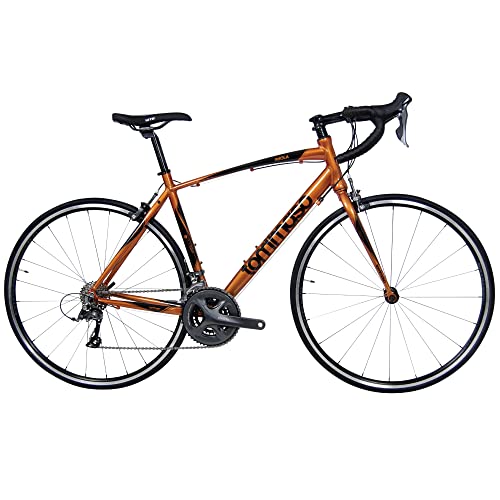 Tommaso Imola — ASIN B0F4NRG9TJ | Check price on Amazon | |
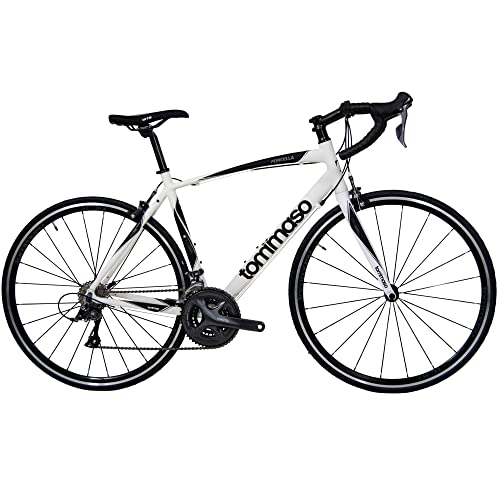 Tommaso Forcella — ASIN B0F4NTMP45 | Check price on Amazon | |
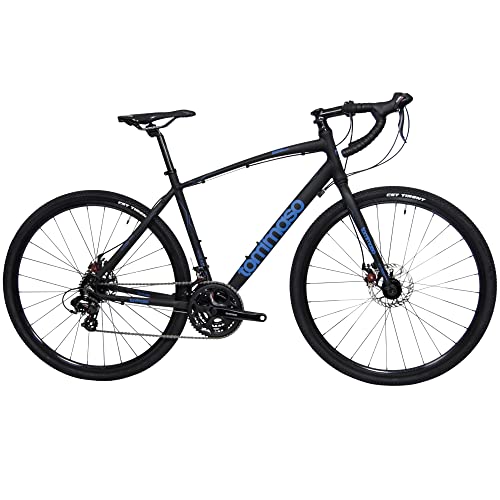 Tommaso Siena — ASIN B077735F9M | Check price on Amazon |
Key takeaways
- The best road bike 2025 shoppers can actually buy on Amazon US: three Tommaso drop-bar models, honest model-year framing, and the fit checks that matter.
Start with the honest framing, because the 2025 road bike market splits cleanly in two. The headline machines from the big racing brands — the aero frames, electronic groupsets and integrated cockpits that fill magazine covers — are sold through dealers and brand websites, not Amazon US. What Amazon US genuinely sells, and has sold for years, is a narrower class of aluminium drop-bar bikes from direct-to-rider brands, and those models are mostly carryover designs rather than freshly redesigned model-year launches. A “2025 road bike” bought on Amazon is therefore best understood as the current production version of a proven design, bought new this season.
That is not a consolation prize. For riders whose goal is fitness mileage, a first drop-bar bike, or a fast commuter, the three Tommaso models below cover the sensible ground, and each one is a real, currently listed Amazon US product. This guide explains what separates them, what the model-year label does and does not mean at this end of the market, and the fit and assembly checks that matter more than the badge on the down tube.
Disclosure: As an Amazon Associate, this site may earn from qualifying purchases made through links in this article, at no additional cost to you.
The three picks
Tommaso Imola — ASIN B0F4NRG9TJ
The Imola is the straightforward road pick of the three: an aluminium frame and fork built around Shimano’s Claris 2×8 drivetrain, with road gearing and rim brakes in the classic layout. Claris is the entry point of Shimano’s road hierarchy, and for this class of bike that is a strength — the parts are durable, replacement chains and cassettes are stocked everywhere, and the 16 gears span the range a new road rider actually uses, from a low gear that gets a beginner up a real climb to a top gear that does not spin out on a descent.
One thing to verify on the live listing: the Imola has shipped in more than one Claris configuration over its production run, so confirm the current build — gearing, brake type and wheel specification — on the page before ordering rather than assuming the specification from an older write-up. That check takes a minute and removes the main surprise this model can spring.
Tommaso Forcella — ASIN B0F4NTMP45
The Forcella sits a step up in the same family. It pairs an aluminium frame with a carbon fork, which trims weight at the front end and takes some of the buzz out of coarse tarmac, and it runs a Shimano Claris R2000 drivetrain in a triple-chainring 3×8 layout. The triple gives a wider, more closely stepped gear range than the Imola’s double, which commuters and riders in rolling terrain often prefer: there is almost always a gear that lands exactly on a comfortable cadence, and the small ring provides a genuinely low bailout gear for loaded riding or steep ramps.
Choose the Forcella over the Imola if the carbon fork and the wider gearing matter to you; choose the Imola if you prefer the simpler double chainring and the classic road specification. Both arrive partially assembled and need the same final setup described below.
Tommaso Siena — ASIN B077735F9M
The Siena is the all-road member of the trio, and it is included with its identity stated plainly: it is a drop-bar bike with a gravel lean. The aluminium frame runs a Shimano Tourney 3×7 drivetrain and Avid BB5 mechanical disc brakes, and it clears 700x40c tyres — far wider than a pure road bike accepts. On smooth tarmac it gives away a little speed to the two bikes above; on broken lanes, hard-packed trails, towpaths and winter roads it is the most capable and comfortable of the three, and the disc brakes keep their power in the wet in a way rim brakes do not.
Pick the Siena if your routes mix surfaces or your local roads are rough enough that tyre volume matters more than outright pace. Pick one of the Claris bikes if your riding is clean pavement from door to door.
What “2025” means at this end of the market
Because these are carryover designs, the model-year question to ask is not “what changed for 2025” but “is this the current production version, and is the specification on the listing the specification I will receive.” Production runs of direct-brand bikes change components quietly — a brake caliper, a wheelset, a saddle — without a new model name. The live listing’s specification block is the authority, which is why the Imola note above tells you to read it. The second question is sizing: these brands publish size charts keyed to rider height and inseam, and their frames run in a small number of sizes, so measure your inseam honestly and pick the size the chart assigns rather than the size you rode a decade ago.
What you should not expect at this level is the current racing technology stack — electronic shifting, hydraulic discs on every model, deep-section wheels. Expecting it leads riders to listings that promise it at prices that cannot support it. The value of this class is mechanical honesty: aluminium frames, proven Shimano drivetrains, and parts any shop can service.
Gearing, brakes and wheels in plain terms
The three drivetrains in this guide span the entry-level Shimano range, and the differences are practical rather than mystical. Tourney (Siena) is the workhorse tier: durable, tolerant of imperfect adjustment, and the cheapest to feed with chains and cassettes, at the cost of slower shifts under load. Claris (Imola and Forcella) is the first tier designed specifically for drop-bar road use, with better lever ergonomics and cleaner shifting; the Imola’s 2×8 double gives eight rear steps with a wide-range cassette, while the Forcella’s 3×8 triple trades a little shifting simplicity for closely spaced gears and a very low climbing ratio. None of the three will trouble a home mechanic: all use standard cables, standard cassettes and threaded or cartridge bottom brackets that any shop stocks.
Brakes divide the picks the same way the drivetrains do. The Imola and Forcella stop with rim brakes — light, simple, and entirely adequate on dry roads, with longer stopping distances and rim wear to accept in the wet. The Siena’s Avid BB5 mechanical discs keep their bite in rain and mud and move the wear from the rim to a replaceable rotor, at the cost of more careful setup: mechanical discs need periodic pad-advance adjustment as the pads wear, a two-minute job with the barrel dial on the caliper. Wheels on all three are conventional aluminium clinchers with quick releases, which means tubes, tyres and spokes are universal and inexpensive — exactly what a bike in this class should ask of its owner.
Sizing: the decision you cannot return easily
These brands sell in a handful of frame sizes, and the size charts key off height with inseam as the tiebreaker. Measure your inseam barefoot against a wall, and if you fall between sizes, the smaller frame is usually the better start for a first drop-bar bike: a slightly short frame can be opened up with a longer stem and seatpost, while a too-large frame puts the bar permanently out of comfortable reach and no adjustment fully cures it. Standover clearance matters most on the Siena, whose larger tyres raise the top tube. If you plan to fit mudguards or a rack for commuting, check the frame’s eyelets and clearances on the listing before ordering — the Forcella’s commuter-friendly gearing makes it the natural candidate, and its specification is the one to confirm for mounting points.
Assembly and first-ride checks
Bikes in this class arrive in a box with the front wheel, handlebar, seatpost and pedals to fit, and the gears and brakes to check. Budget an hour and a set of hex keys, a pedal wrench and a pump. Three checks decide whether the bike rides well: the headset and stem bolts torqued so the steering is free of play, the derailleur limits and indexing set so the chain neither drops nor hesitates, and the brake pads aligned to the rim or rotor without rub. If any of those feel beyond you, a bike shop’s new-bike safety check is inexpensive insurance and usually includes a bolt check over the whole machine.
Fit the saddle height first — a slight bend in the knee at the bottom of the stroke — and set the saddle level before experimenting with tilt. Then ride a short loop, brake firmly a dozen times to bed the pads in, and re-check the quick releases or thru-axles and the stem bolts afterwards.
Who each bike suits
- First drop-bar bike on clean roads: the Imola, for its simple double-chainring Claris build.
- Commuting and rolling terrain: the Forcella, for the carbon fork and the triple’s close gear steps.
- Mixed surfaces and rough lanes: the Siena, for tyre clearance and disc brakes.
What a season of ownership looks like
Budget road bikes ask for predictable, inexpensive care. Chains on 7- and 8-speed drivetrains are cheap and should be replaced on wear rather than mileage pride — a worn chain eats the cassette and chainrings with it. Rim-brake pads on the Imola and Forcella wear faster in gritty winter conditions, and their wear is also the rim’s wear: check the rim sidewalls each spring for the concave groove that says the rim itself is done. The Siena’s disc rotors and pads cost a little more per change but spare the rims entirely. All three bikes use standard cables, standard tyres in common widths and threaded or cartridge bearings that any shop can service without ordering exotic parts — the real total cost of a season on any of them is tyres, a chain and brake wear parts, and that modesty is a large part of the class’s appeal.
Whichever of the three you choose, budget the first month for adjustment rather than judgement: cables stretch, brake pads bed in and positions settle, and the bike at week four is the bike you actually bought.
Verdict
For a road bike bought on Amazon US in the 2025 season, the Tommaso Imola (B0F4NRG9TJ) is the default recommendation, the Forcella (B0F4NTMP45) is the step-up for its fork and gearing, and the Siena (B077735F9M) is the honest all-road alternative. Verify the current build on the live listing for whichever you choose — that single habit is what separates a good buy in this class from a surprise in a box.