Our Short List of 3

- Best for: riders planning longer pedal-assist loops on mixed pavement and dirt.
- Motor: 500W brushless rear hub motor, 750W peak
- Battery: 48V 10.4Ah removable, 499Wh
- Range: up to 55 miles in pedal-assist mode
- Wheels: 27.5-inch with 2.1-inch tyres
- Best for: riders who want the big battery in a more compact 26-inch frame with certification stated in the listing.
- Motor: 500W brushless rear hub motor, 750W peak
- Battery: 48V 10.4Ah removable and lockable, 499Wh
- Range: up to 55 miles in pedal-assist mode
- Top speed: 22 mph

- Best for: commuters and casual trail riders with a set daily distance.
- Motor: 500W brushless rear hub motor
- Battery: 48V removable, 374.4Wh
- Range: 22-25 miles electric, 44-50 miles pedal assist
- Top speed: 20 mph
All 4 Picks at a Glance
| Product | Specs | Action |
|---|---|---|
| ANCHEER Hummer 27.5 |
| Check price on Amazon |
| ANCHEER Gladiator 26 |
| Check price on Amazon |
| Vivi M026SHUL |
| Check price on Amazon |
 TotGuard 26-inch |
| Check price on Amazon |
Key takeaways
- Four hub motor electric mountain bikes compared on motor output, battery capacity, wheel size and suspension, with picks for trails, commuting and hills.
A hub motor e-mountain bike looks simple on paper, yet the real decision sits in three numbers: how much power the rear wheel motor makes, how many watt-hours the battery carries, and whether the gearing lets that motor stay in its happy zone on a climb. Hub drives have no mid-motor leverage through the chain, so a wide gear range and a battery sized for your longest loop matter more than a headline wattage figure.
This roundup suits newer trail riders, commuters who cut across dirt shortcuts, and anyone replacing a car trip with a bike that can still climb the hill on the way home. Every pick below is a rear hub motor mountain bike taken from its Amazon listing name and specification table, with motor output, battery energy, wheel size and suspension read straight from that listing rather than from brand marketing pages.
Quick Picks
As an Amazon Associate we earn from qualifying purchases.
| Product | Best for | Key spec from title |
|---|---|---|
| ANCHEER Hummer 27.5 | Longer pedal-assist rides on mixed routes | 48V 499Wh battery, 27.5-inch wheels |
| ANCHEER Gladiator 26 | Riders who want a certified 26-inch setup | 499Wh battery, UL 2849 compliant |
| Vivi M026SHUL | Commuting plus light trail detours | 48V 374.4Wh battery, 21-speed gearing |
| TotGuard 26-inch | A lighter bike that stores and lifts easily | 36V 374Wh battery, 45.1 lb |
How to Choose
Motor Wattage and What Peak Figures Mean
Listings headline two numbers: a rated wattage and a higher peak figure reached in short bursts. The rated number is the one that shapes daily riding, because it describes the output the motor can hold on a long grade. A 500W rear hub motor is the common size in this class and handles fire roads and moderate singletrack well. Treat the peak figure as headroom for short, steep pitches rather than a promise, and match it against your own weight plus any pack or rack load you carry.
Battery Watt-Hours Over Amp-Hours
Amp-hours alone mislead, because a 10.4Ah pack at 48V stores far more energy than the same amp-hours at 36V. Multiply volts by amp-hours, or read the watt-hour line in the product information, and compare that single figure across bikes. Around 374Wh suits shorter loops and mixed commuting, while roughly 499Wh stretches pedal-assist distance on weekend rides. A removable pack also matters if you charge indoors or store the bike in a cold garage, since you can bring the battery inside on its own.
Gearing, Because the Hub Cannot Borrow Your Legs
A mid-drive motor multiplies your pedaling through the chain, but a hub motor spins the wheel directly, so the bicycle gears are your only help on climbs. A 21-speed drivetrain with a genuinely low first gear lets you keep cadence up while the motor works in its efficient band, instead of lugging and draining the battery. Check the listing for the speed count and shifter type, and be wary of single-speed or narrow-range setups if your routes include sustained grades or loose surfaces.
Wheel Size, Suspension and Brakes
Wheel diameter changes how the bike rolls over roots and ruts: 27.5-inch wheels carry momentum and smooth out rough ground, while 26-inch wheels accelerate quicker and fit shorter riders more easily. Every bike here uses a front suspension fork, several of them lockable for pavement, and none has rear suspension, so tyre volume does part of the comfort work. Mechanical disc brakes are standard at this level; confirm the listing names disc brakes front and rear, because stopping a heavier electric bike on a wet descent asks more of the hardware.
The 4 Best Options
ANCHEER Hummer 27.5
- Best for: riders planning longer pedal-assist loops on mixed pavement and dirt.
- Motor: 500W brushless rear hub motor, 750W peak
- Battery: 48V 10.4Ah removable, 499Wh
- Range: up to 55 miles in pedal-assist mode
- Wheels: 27.5-inch with 2.1-inch tyres
riders planning longer pedal-assist loops on mixed pavement and dirt.
at 52 lb it is the joint-heaviest style of bike here, so check your lifting and storage plan before ordering.
The Hummer is the long-distance option in this group, built around a 500W rear hub motor and the joint-largest battery here, a removable 48V pack rated at 499Wh. Its 27.5-inch wheels with 2.1-inch tyres roll over broken fire roads with less chatter than the 26-inch bikes, and the lockable front fork lets you firm things up for the paved ride to the trailhead. A 21-speed drivetrain gives the hub motor the low gears it needs on climbs, and the listing’s three-hour fast charge claim shortens the gap between rides.
ANCHEER Gladiator 26
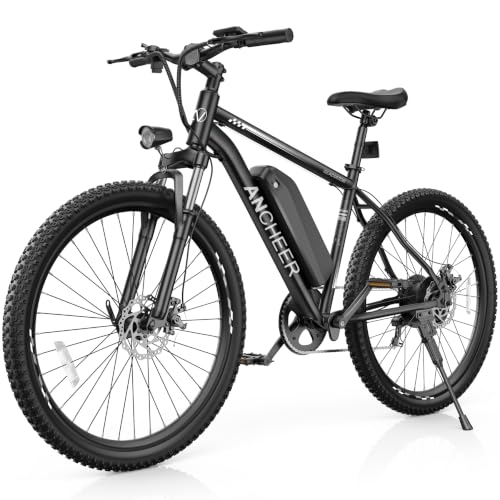
- Best for: riders who want the big battery in a more compact 26-inch frame with certification stated in the listing.
- Motor: 500W brushless rear hub motor, 750W peak
- Battery: 48V 10.4Ah removable and lockable, 499Wh
- Range: up to 55 miles in pedal-assist mode
- Top speed: 22 mph
riders who want the big battery in a more compact 26-inch frame with certification stated in the listing.
the listing covers more than one battery size across its variants, so confirm the 499Wh version is the one in your cart.
The Gladiator pairs the same 500W rear hub layout and 499Wh removable battery with smaller 26-inch wheels, which makes the bike quicker to turn and easier to fit if you are on the shorter side. Its listing leads with UL 2849 compliance, a system-level electrical certification that the other value picks do not all state, and the 21-speed drivetrain keeps the familiar wide range that hub motors depend on. Mechanical disc brakes at both ends and a front suspension fork round out a straightforward hardtail build aimed at new electric riders.
Vivi M026SHUL
- Best for: commuters and casual trail riders with a set daily distance.
- Motor: 500W brushless rear hub motor
- Battery: 48V removable, 374.4Wh
- Range: 22-25 miles electric, 44-50 miles pedal assist
- Top speed: 20 mph
commuters and casual trail riders with a set daily distance.
the smaller battery is the limiting factor on hilly routes, so size your loop around the electric-only figure if you climb a lot.
The Vivi M026SHUL runs a smaller 374.4Wh battery than the two ANCHEER bikes, and its listing is honest about what that means: roughly 22 to 25 miles on throttle alone, stretching to 44 to 50 miles once you pedal with assist. The 500W rear hub motor, 21-speed Shimano gearing and front suspension fork follow the same proven hardtail formula, and the aluminum frame keeps the complete bike at 53 lb. It suits riders whose daily distance is known and modest, and who would rather carry less battery than they rarely use.
TotGuard 26-inch
- Best for: riders who prioritise low weight for storage, racks and stairs.
- Motor: 350W rear hub motor
- Battery: 36V removable, 374Wh
- Range: up to 50 miles
- Top speed: 19.8 mph
riders who prioritise low weight for storage, racks and stairs.
the 350W motor and 36V system give the least climbing headroom here, so steep, long grades will need more rider effort.
The TotGuard is the lightest bike in this roundup at 45.1 lb, which makes it the easiest to lift onto a rack or carry up apartment steps. Its product information lists a 350W rear drive motor and a 36V battery with 374Wh of energy, a gentler setup that trades outright punch for that low weight. You still get 21 speeds, a lockable suspension fork, an LCD display and three riding modes, and the listing quotes up to 50 miles of range. For smaller riders and shorter hills, the trade makes sense.
Which One Fits Your Situation
Your Weekend Loops Run Past Thirty Miles
Pick the ANCHEER Hummer 27.5. The 499Wh battery is the joint-largest in this group, the 27.5-inch wheels hold speed over rough ground, and the fast charge claim in its listing means a morning top-up can still salvage an afternoon ride. Riders covering long fire-road circuits will feel the extra energy on the last climb home.
You Are Shorter, or the Bike Lives Upstairs
Look at the TotGuard first. At 45.1 lb it is several pounds lighter than the other bikes here, and the 26-inch wheels suit shorter legs at stops. If you carry the bike daily, that weight gap matters more than the stronger motors elsewhere in this list, provided your hills are moderate rather than mountainous.
Your Ride Mixes Pavement Commuting With Dirt Shortcuts
The Vivi M026SHUL fits this pattern well. Its pedal-assist range covers a working week of moderate commutes, the front fork takes the edge off gravel cut-throughs, and the smaller battery keeps the specification honest for riders who never drain a big pack. The 21-speed gearing still gives the hub motor help on the ride home.
You Want Certification Spelt Out in the Listing
Choose the ANCHEER Gladiator 26. Its title states UL 2849 compliance directly, and you keep the 499Wh battery and 500W hub motor shared with the Hummer, just in a 26-inch package. Buyers shopping for a first electric bike for a family member often put that documented certification at the top of the list.
Common Mistakes
- Comparing amp-hours between a 36V bike and a 48V bike as if they were equal; convert to watt-hours first.
- Expecting a hub motor to climb like a mid-drive; without a low first gear, steep grades drain the battery and heat the motor.
- Reading the peak wattage figure as the motor’s sustained output when the rated figure is the one that shapes real rides.
- Ignoring total bike weight, then discovering the bike is hard to lift onto a car rack or carry into storage.
- Assuming every variant on a listing shares one battery size; some listings group 374Wh and 499Wh versions under a single page.
Frequently Asked Questions
Is a hub motor or a mid-drive better for trail riding?
Mid-drives pull through the chain and use your gears, which helps on very steep, technical climbs. Hub motors are simpler, quieter in drivetrain wear, and usually appear on more affordable hardtails like these. For fire roads, rail trails and moderate singletrack, a 500W rear hub with a wide gear range covers most recreational riding without fuss.
How far will a 499Wh battery actually take me?
Listings quote up to 55 miles in pedal-assist mode for the 499Wh bikes here, measured under favourable conditions. Heavier riders, hills, cold weather and higher assist levels shorten that figure, sometimes by a third or more. Plan your longest regular loop against a conservative estimate, and treat the quoted number as a ceiling rather than a guarantee.
Can I ride one of these bikes without using the motor?
Yes. Every bike in this roundup keeps a normal chain drivetrain with 21 speeds, so you can pedal unassisted on flat ground or if the battery runs flat. The extra weight over a regular mountain bike is noticeable on climbs, which is why the lightest model here, at 45.1 lb, appeals to riders who mix powered and unpowered days.
What should I check when the bike arrives?
These bikes ship partly assembled, so confirm the front wheel, handlebar and pedals are fitted and torqued as the manual describes. Check that the battery you received matches the watt-hour figure on the listing variant you chose, run the disc brakes through a careful bedding-in ride, and verify the suspension fork lockout works before your first long outing.