Our Short List of 3
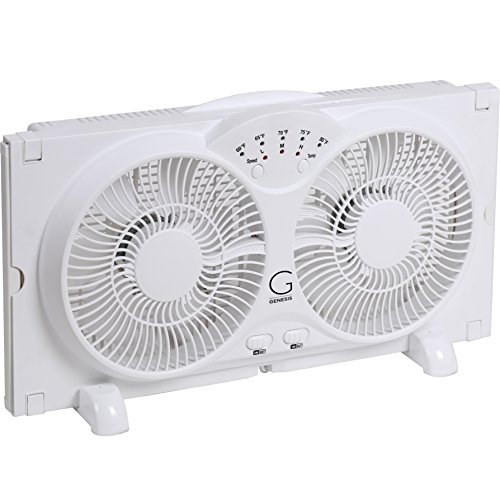
- Best for: Large rooms and hot spaces where maximum air movement matters most.

- Best for: Bedrooms and living rooms where you want strong airflow and remote control without much noise.

- Best for: Buyers who want one fan that can cool, exhaust and circulate with a remote.
All 4 Picks at a Glance
| Product | Specs | Action |
|---|---|---|
| Genesis Twin Fan High Velocity Reversible AirFlow Window Fan |
| Check price on Amazon |
| shinic 9-Inch Twin Window Fan |
| Check price on Amazon |
| COMFORT ZONE CZ310R Twin Window Fan |
| Check price on Amazon |
 Bionaire 8.5-Inch Twin Window Fan |
| Check price on Amazon |
Key takeaways
- Compare the best high capacity window fans for large rooms, with twin blades, reversible airflow, thermostats, remotes and quiet high-CFM cooling power.
A stuffy room on a hot evening is hard to fix with a small desk fan. What actually helps is moving a large volume of air through the window, pulling cool evening air in or pushing hot, stale air out. That is exactly what the best high capacity window fans are built to do. With twin blades, reversible airflow and room-sized coverage, these fans can cool a bedroom, living room or home office far more effectively than a single-blade unit, while using far less electricity than an air conditioner.
Choosing the right one is not just about picking the biggest fan on the shelf. Airflow capacity, blade size, speed settings, thermostat control, noise level and window fit all matter. This guide compares four high capacity window fans based on specifications, features, and user feedback, so you can match the right model to your room size and window type.
Disclosure: As an Amazon Associate, we earn from qualifying purchases.
Quick Picks at a Glance
| Product | Key Spec | Best For |
|---|---|---|
| Genesis Twin Fan A1WINDOWFAN | Twin 9-inch blades, copper motors, 3 speeds, thermostat | Maximum airflow in large rooms |
| shinic 9-Inch Twin Window Fan | 450 CFM, 3 speeds, remote, 49 dB | Quiet high airflow with remote control |
| COMFORT ZONE CZ310R Twin Window Fan | 431 CFM, 3 speeds, remote, 3 airflow modes | Flexible cooling, exhaust and circulation |
| Bionaire 8.5-Inch Twin Window Fan | Twin 8.5-inch blades, thermostat, remote, 30 dB | Bedrooms and thermostat-controlled cooling |
How to Choose
Airflow capacity
Airflow is the heart of this category, and it is usually expressed in cubic feet per minute, or CFM. A higher CFM rating means the fan moves more air each minute, which matters most in large rooms, rooms with high ceilings and spaces that trap heat during the day. For a small bedroom, a fan in the 250 to 350 CFM range may be enough, but for a living room or a sun-facing room, look for 400 CFM or more. Not every maker publishes a CFM figure, so when one is missing, twin 9-inch blades and a high speed setting are useful signals of strong airflow.
Blade size and number
Twin-blade fans dominate the high capacity category for a simple reason: two blades move roughly twice as much air as one. Nine-inch blades are the common standard for full-size window fans, striking a good balance between airflow and fit. Smaller 8.5-inch blades can still perform well with strong motors and good blade design, and they fit slightly shorter windows. For raw air movement, twin 9-inch heads are the safer bet.
Reversible airflow
Reversible airflow turns a window fan from a simple cooler into a ventilation tool. In intake mode, the fan draws cool outdoor air inside. In exhaust mode, it pulls hot, stale air out of the room. The most useful models let each blade run independently, so one side can bring fresh air in while the other pushes warm air out, creating a genuine air exchange. Some fans reverse electronically at the push of a button or from a remote, while others must be turned around in the window by hand.
Speed settings and controls
Three speeds give you real control over the trade-off between airflow and noise. Low is right for sleeping, medium suits everyday cooling and high is for clearing out a hot room quickly. A remote control is worth having, because it lets you change speed or direction without getting out of bed. Thermostat control is even better for overnight use: the fan switches itself on and off to hold your chosen temperature instead of running at full blast all night.
Noise level
High capacity and silence rarely go together, but the gap between models is large. Listings in this category range from about 30 dB on the quietest models to over 50 dB on the loudest, and that difference is very noticeable in a bedroom. If you are a light sleeper, prioritize a model with a listed noise level under 50 dB and a dedicated quiet or low setting.
Window fit and installation
Measure your window before ordering anything. Most twin window fans use expandable side panels that fit openings from about 23.5 to 37 inches wide, and they need a minimum opening height of roughly 9 to 13 inches depending on the model. A fan that is too wide will not seat properly, and gaps around the edges let hot air leak back in, undoing much of the cooling. Look for auto-locking expanders, foam seal strips and a removable bug screen, which make installation easier and the finished fit tighter.
Power use and safety
Window fans are efficient by nature, and most of the models here draw between about 36 and 80 watts, a fraction of what an air conditioner uses. ETL certification is a useful safety marker, and copper motors tend to last longer and run cooler than cheaper alternatives. A warranty of one to three years is standard, and longer coverage is a reasonable tiebreaker between otherwise similar fans.
Top Picks
Genesis Twin Fan High Velocity Reversible AirFlow Window Fan
- Best for: Large rooms and hot spaces where maximum air movement matters most.
Large rooms and hot spaces where maximum air movement matters most.
Genesis Twin Fan High Velocity Reversible AirFlow Window Fan
The Genesis A1WINDOWFAN is the airflow-first pick in this roundup. It pairs two independent 9-inch fan heads, each driven by its own durable copper motor, with three speed settings and a built-in adjustable thermostat with LED indicators. Reversible airflow lets it draw fresh air in, exhaust hot air out, or run both heads in opposite directions for a full air exchange. Roundups cite a listed airflow capacity of about 706 CFM for this model, the highest figure in this group, which makes it a strong match for large rooms that stay warm long after sunset. Expandable side panels fit windows up to 37 inches wide, and the unit measures 24 by 12 by 4 inches. It is ETL certified and carries a Max Cool setting for the hottest days.
Pros:
– Twin 9-inch blades with independent copper motors for strong airflow
– Adjustable thermostat with LED indicators and Max Cool technology
– Reversible intake and exhaust airflow
– Expandable panels fit windows up to 37 inches wide
Cons:
– No remote control, so speed and mode changes happen at the unit
– Larger frame needs a taller window opening than slimmer models
– Top speed is audible, as expected from a high-velocity fan
shinic 9-Inch Twin Window Fan
- Best for: Bedrooms and living rooms where you want strong airflow and remote control without much noise.
Bedrooms and living rooms where you want strong airflow and remote control without much noise.
The shinic twin window fan combines the highest published CFM rating among the remote-controlled models here with a noise level that stays friendly for bedrooms. Its listed airflow capacity is 450 CFM, and its listed noise level is 49 dB, a combination that is hard to find in this category. Three speeds and three airflow modes, Cool, Exhaust and Circulate, cover intake, exhaust and whole-room air exchange, and the included remote handles speed and mode changes from across the room. The expandable panels adjust from 23.5 to 37 inches and lock in place, and the box includes a removable cover, a bug screen, standing feet and a foam seal strip. ETL certification rounds out a well-equipped package.
Pros:
– Listed 450 CFM airflow with a listed 49 dB noise level
– Remote control with 3 speeds and Cool, Exhaust and Circulate modes
– Expandable panels fit windows from 23.5 to 37 inches
– Removable bug screen, dust cover, standing feet and foam seal included
Cons:
– No programmable thermostat for automatic temperature control
– Plastic housing feels lighter than metal-framed alternatives
– Circulate mode splits airflow, so single-direction output drops
COMFORT ZONE CZ310R Twin Window Fan
- Best for: Buyers who want one fan that can cool, exhaust and circulate with a remote.
Buyers who want one fan that can cool, exhaust and circulate with a remote.
COMFORT ZONE CZ310R Twin Window Fan
The COMFORT ZONE CZ310R is the most versatile model in this roundup, and its listing backs that up with real numbers: a listed airflow capacity of 431 CFM, 9-inch turbo blades, three speeds, a 57.5-watt draw and a listed noise level of 52 dB. Its three-in-one design offers Cool, Exhaust and Circulate modes, so it can bring fresh air in, push stale air out, or exchange air in both directions at once. A remote controls power, speed, function and direction, and the unit comes with a removable cover and a removable bug screen. Expandable panels fit windows from 23.5 to 37 inches, and the fan runs at up to 1270 RPM. A one-year warranty is included.
Pros:
– Listed 431 CFM airflow with 9-inch turbo blades and 3 speeds
– Three modes, Cool, Exhaust and Circulate, with remote control
– Removable cover and bug screen included
– Expandable panels fit windows from 23.5 to 37 inches
Cons:
– Listed 52 dB noise level is higher than the quietest picks here
– Reversing airflow depends on the selected mode rather than independent blade control
– One-year warranty is shorter than the three-year coverage on the Bionaire
Bionaire 8.5-Inch Twin Window Fan
- Best for: Bedrooms and light sleepers who want quiet, thermostat-controlled cooling.
Bedrooms and light sleepers who want quiet, thermostat-controlled cooling.
Bionaire 8.5-Inch Twin Window Fan
The Bionaire twin window fan is the most polished pick here, and it is the one to choose if the fan will live in a bedroom. Its two 8.5-inch blades run independently, so one side can draw cool air in while the other exhausts warm air out, and the programmable thermostat automatically switches the fan on and off to hold your chosen temperature. The digital LED display has a dimmer function for dark rooms, and the included remote covers operation from across the room. Its listed noise level is 30 dB, the lowest in this group, and user feedback consistently praises how quiet it runs even on high. The unit measures 4 by 24 by 12.8 inches, fits windows from 24 to 36 inches with its accordion extender panels, needs no assembly and comes with a three-year limited warranty. With a 4.4-star average across more than 19,000 ratings, it is also the most widely reviewed fan in this roundup.
Pros:
– Programmable thermostat with LED display and dimmer function
– Independent blade control for intake, exhaust or simultaneous exchange
– Listed 30 dB noise level, the quietest pick here
– Remote control and three-year limited warranty included
Cons:
– 8.5-inch blades are slightly smaller than the 9-inch blades on rival picks
– No published CFM figure, so airflow is harder to compare on paper
– Some users report the temperature sensor reads warmer than the room
Comparison Table
| Feature | Genesis A1WINDOWFAN | shinic 9-Inch Twin | COMFORT ZONE CZ310R | Bionaire 8.5-Inch Twin |
|---|---|---|---|---|
| Airflow | About 706 CFM reported | 450 CFM | 431 CFM | Not published |
| Blade size | Twin 9-inch | 9-inch | 9-inch | Twin 8.5-inch |
| Speeds | 3 | 3 | 3 | 3 |
| Noise level | Not published | 49 dB | 52 dB | 30 dB |
| Thermostat | Yes, adjustable | No | No | Yes, programmable |
| Remote control | No | Yes | Yes | Yes |
| Window width fit | Up to 37 inches | 23.5 to 37 inches | 23.5 to 37 inches | 24 to 36 inches |
| Warranty | Not published | Not published | 1 year | 3 years |
Buying Guide
Start with your room, not the fan. Measure the window opening first, both width and height, and check the minimum opening each model needs. A twin fan that fits a 36-inch living room window may not fit a 25-inch bedroom window at all, and a fan squeezed into an opening it was not designed for will rattle, leak air and underperform. For standard double-hung windows, the twin 9-inch models in this guide are the right starting point.
Next, decide how you will actually use the fan. If the goal is cooling a bedroom overnight, a thermostat and a low noise level matter more than raw CFM, and the Bionaire is the natural fit. If the goal is clearing heat out of a large living room after a hot day, maximum airflow and a high speed setting matter most, and the Genesis leads on that front. If you want one fan that does a bit of everything, with a remote and three modes, the COMFORT ZONE or the shinic will cover more situations than a single-purpose model.
Installation mistakes are the most common reason a good window fan disappoints. The biggest one is leaving gaps around the expanders, which lets hot outdoor air leak back inside and cancels out much of the cooling. Use the foam seal strip that comes in the box, and add weatherstripping if the fit is still loose. Another common mistake is running the fan with all the windows closed, which starves it of replacement air, so open a window on the opposite side of the home to give air a clear path through the room. Clean the blades and the bug screen regularly, because dust buildup reduces airflow and makes the motor work harder and louder over time.
Budget matters, but in this category the spread between models is modest, and the cheapest fan is rarely the best value if it lacks the features you will use every day. A remote control costs little and gets used constantly. A thermostat saves electricity and improves sleep. A longer warranty is worth real money on a fan that runs for months each year. Spend on the features that match your room and habits.
Frequently Asked Questions
What counts as a high capacity window fan?
A high capacity window fan is one built to move a large volume of air, usually with twin 9-inch blades, three speeds and a listed airflow capacity of 400 CFM or more. Single-blade fans and small portable fans move far less air and are better suited to personal cooling than to ventilating a whole room.
How much CFM do I need for a large room?
For a large living room or a room with high ceilings, look for a fan rated at 400 CFM or above, such as the shinic at 450 CFM or the COMFORT ZONE CZ310R at 431 CFM. For a standard bedroom, a lower figure can work well, especially with a thermostat and reversible airflow.
Are twin window fans better than single window fans?
For whole-room cooling and ventilation, yes. Two blades move substantially more air than one, and twin fans can run one blade in and one out for a genuine air exchange. A single-blade fan can still work in a small room, but it cannot match a twin fan for clearing hot air out of a large space.
Should I run a window fan on intake or exhaust?
Use intake in the evening when the outdoor air is cooler than the indoor air, and use exhaust during the day or after cooking to push hot, stale air out. The most flexible setup is running one blade on intake and one on exhaust at the same time, which exchanges the air in the room instead of just pushing it in one direction.
Can I leave a window fan running all night?
Yes, provided the fan is installed securely and has a thermostat or a low speed setting. A thermostat lets the fan switch itself off once the room reaches your chosen temperature, and a quiet model with a listed noise level under 50 dB is far less likely to disturb sleep. Keep the window locked or secured around the fan for safety.
Do window fans work with air conditioning?
They can complement it well. Running a window fan on intake during cool evenings brings in fresh air and can delay or reduce the need for air conditioning, while running it on exhaust removes hot air before the air conditioner has to deal with it. On very hot and humid days, an air conditioner works better, and the fan is best used for ventilation.
Conclusion
The best high capacity window fans move a lot of air, reverse direction when you need them to and fit your window properly, and the right pick depends on how you will use it. Choose the Genesis A1WINDOWFAN if maximum airflow for a large, hot room is the priority. Choose the shinic 9-inch twin if you want strong 450 CFM airflow with a remote and a bedroom-friendly noise level. Choose the COMFORT ZONE CZ310R if you want three modes, a remote and flexible cooling, exhaust and circulation in one unit. Choose the Bionaire 8.5-inch twin if the fan will run overnight in a bedroom, where its quiet 30 dB operation, programmable thermostat and three-year warranty matter most. Measure your window, pick the airflow and features that match your room, and a good window fan will keep your home cooler and fresher all season.