Our Short List of 3

- Best for: Drinkers who want a thick, pulpy juice that works as a smoothie base with little or nothing blended in.
- Type: Masticating cold press juicer
- Power: 150 watts
- Juice jug: 24 oz
- Pulp container: 36 oz

- Best for: Households prepping juice for several smoothies at once and storing it in the pitcher.
- Type: Centrifugal juicer
- Power: 1000 watts
- Juice pitcher: 27 oz
- Container capacity: 1.5 liters
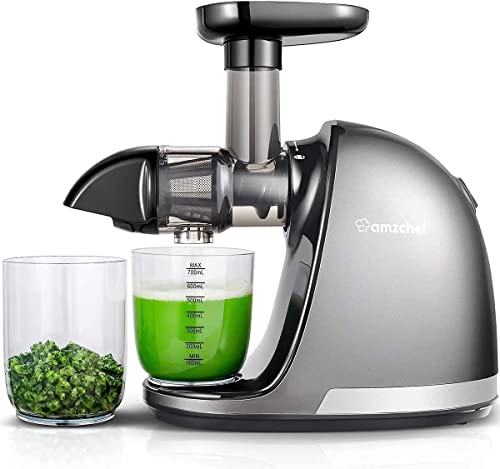
- Best for: Solo juicers and small kitchens that want quiet cold press juice for morning smoothies.
- Type: Masticating cold press juicer
- Power: 150 watts
- Auger: 7-spiral masticating system
- Function: Reverse function to clear jams
All 3 Picks at a Glance
| Product | Specs | Action |
|---|---|---|
| Ninja NeverClog Cold Press Juicer JC151 |
| Check price on Amazon |
| NutriBullet Juicer Pro NBJ50200 |
| Check price on Amazon |
| AMZCHEF Cold Press Masticating Juicer ZM1501 |
| Check price on Amazon |
Key takeaways
- Four juicers that suit smoothie making, from a pulp-control cold press to fast centrifugal models with wide chutes, big pulp bins and easy cleanup.
A juicer never blends, so the real decision is texture: how much pulp and body you want left in the glass, and whether the juice will be drunk on its own or poured over banana, yogurt or greens to build a smoothie. A centrifugal machine gives you a thin, clear juice in seconds, while a cold press with pulp control can hand you a thicker pour that already feels halfway to a smoothie. Chute width, jug size and cleanup decide the rest, because a slow-to-wash machine gets used less.
This roundup suits four kinds of buyers: people who want pulpy, smoothie-like drinks straight from the spout, families juicing big batches on busy mornings, shoppers who want a powerful centrifugal with a proper pitcher, and small kitchens that need quiet early-morning runs. Every pick was chosen from the titles and spec blocks on its Amazon listing, and the set mixes two cold press machines with two centrifugal models so the texture choice stays in your hands.
Quick Picks
As an Amazon Associate we earn from qualifying purchases
| Product | Best for | Key spec from title |
|---|---|---|
| Ninja NeverClog Cold Press Juicer JC151 | Thick, pulpy pours that drink like a smoothie base | Total Pulp Control with 2 pulp filters |
| Breville Juice Fountain Plus JE98XL | Fast batches of clear juice for several people | 850 watts with an extra wide 3-inch chute |
| NutriBullet Juicer Pro NBJ50200 | Strong centrifugal juicing with a lidded pitcher | 1000 watts, 27 oz pitcher and 1.5 liter container |
| AMZCHEF Cold Press Masticating Juicer ZM1501 | Quiet small-batch juicing in a compact body | Cold press auger with reverse function |
How to Choose
Pulp Control Decides the Texture
For smoothie drinkers, pulp is not a flaw to remove but an ingredient to manage. A machine with interchangeable pulp filters, like the Ninja JC151, lets you keep more fiber in the jug, and that thicker juice needs little added to feel filling. Fixed-screen centrifugal models strain nearly everything out, which suits people who plan to blend the juice with soft fruit afterward. Decide which glass you actually want before you compare motors, because no setting on a clear-juice machine will give you a pulpy pour, and no filter swap turns a cold press into a fast batch juicer.
Centrifugal Speed Versus Cold Press Yield
Centrifugal juicers spin a mesh basket at high speed, so a pile of apples and carrots becomes juice in under a minute, though the pulp often stays damp and soft fruit can slip through half-worked. Cold press machines crush produce slowly with an auger, wringing more liquid from leafy greens, celery and berries, and the juice tends to keep a deeper color. For smoothie routines built on kale and spinach, that yield gap matters more than raw pace. For a household juicing hard produce for four people before school, the centrifugal usually wins on time alone.
Chute Width and Prep Time
A 3-inch feed chute swallows whole apples, peeled oranges and bunches of celery, which cuts the board work to a quick rinse for many recipes. Narrow cold press chutes ask for strips and chunks, adding a few minutes before the machine even switches on. That trade is worth making when you juice once a day in a calm kitchen, and harder to accept when smoothies are a weekday habit squeezed between other jobs. Check the chute figure in the listing title or spec block, and be honest about how much chopping you will tolerate on a tired morning.
Jug Size, Pulp Bin and Cleanup
Smoothie making often means juicing for the blender jug plus a glass or two, so a small juice jug forces mid-session emptying. A pulp bin above two quarts lets you finish a family batch without stopping, and a jug with a lid goes straight into the fridge for later blending. Cleanup is the quiet deciding factor: dishwasher safe parts and an included brush shorten the wash to a rinse, while hand-wash-only cold press parts need a soak and a scrub. Count the pieces in the listing, and picture washing them daily, not once.
The 4 Best Options
Ninja NeverClog Cold Press Juicer JC151
- Best for: Drinkers who want a thick, pulpy juice that works as a smoothie base with little or nothing blended in.
- Type: Masticating cold press juicer
- Power: 150 watts
- Juice jug: 24 oz
- Pulp container: 36 oz
Drinkers who want a thick, pulpy juice that works as a smoothie base with little or nothing blended in.
The 24 oz jug is sized for one or two servings, so big family batches need a second run.
This is the pick for anyone who wants the juicer itself to do most of the smoothie work. Its two interchangeable pulp filters let you choose a clearer pour or a thick, pulpy one, and the pulpy setting gives juice enough body to drink like a light smoothie with nothing added. The cold press auger handles leafy greens and soft berries more thoroughly than a spinning basket, and the compact body with dishwasher safe parts fits a daily routine in a smaller kitchen without a long wash-up afterward.
Breville Juice Fountain Plus JE98XL
Pick this centrifugal when mornings are busy and the smoothie plan begins with a fast jug of clear juice. The 850-watt motor and two speeds move through whole apples and hard carrots quickly, the low setting treats softer fruit and leafy vegetables more gently, and the jug carries a built-in froth separator for a cleaner pour into the blender. The large pulp container means a full family batch finishes in one session, and the stainless steel cutting disc and micro mesh basket are built for that kind of repeated, high-volume work.
Specs
- Type: Centrifugal juicer
- Power: 850 watts
- Speeds: 2 speeds, 6,500 and 13,000 RPM as stated by the maker
- Feed chute: 3 inches, extra wide
- Juice jug: 35.2 fl oz with froth separator
- Pulp container: 2.6 qt
- Cutting disc: Stainless steel, titanium reinforced, with Italian-made micro mesh filter basket
- Weight: 10.1 pounds
- Warranty: 1 year limited
Best for: Families who juice a large batch of clear juice quickly, then blend it into smoothies.
Watch out for: The juice comes out thin and clear, so body has to come from whatever you blend in later.
NutriBullet Juicer Pro NBJ50200
- Best for: Households prepping juice for several smoothies at once and storing it in the pitcher.
- Type: Centrifugal juicer
- Power: 1000 watts
- Juice pitcher: 27 oz
- Container capacity: 1.5 liters
Households prepping juice for several smoothies at once and storing it in the pitcher.
Like every centrifugal here, it strains out nearly all the pulp, so smoothies need soft fruit or yogurt for body.
This centrifugal suits buyers who juice smoothie ingredients in quantity and want the juice collected in a proper pitcher rather than a small jug. The 1000-watt motor is the strongest in this set, the pitcher pours cleanly into a blender jar, and the silver body sits neatly beside other NutriBullet gear. It follows the same logic as the Breville but with more motor headroom and a container setup aimed at people who prep juice for several smoothies at once, then store the pitcher in the fridge until blending time arrives.
AMZCHEF Cold Press Masticating Juicer ZM1501
- Best for: Solo juicers and small kitchens that want quiet cold press juice for morning smoothies.
- Type: Masticating cold press juicer
- Power: 150 watts
- Auger: 7-spiral masticating system
- Function: Reverse function to clear jams
Solo juicers and small kitchens that want quiet cold press juice for morning smoothies.
The narrow chute means real prep work, and the plastic parts are hand-wash only.
Choose this compact cold press when the kitchen is small, the budget is watched, and juicing happens while other people sleep. The seven-spiral auger squeezes greens, celery and ginger slowly and quietly, the reverse function clears the occasional jam without opening the machine, and the light body moves on and off the counter without a struggle. It asks for produce cut into strips for its narrow chute, and the parts wash by hand, so it rewards a calm, unhurried routine rather than a rushed one. A brush and a recipe booklet come in the box.
Which One Fits Your Situation
Thick Drinks With Nothing Blended In
Reach for the Ninja JC151 and fit the Lots of Pulp filter. The juice keeps enough fiber and body to drink like a light smoothie straight from the jug, which removes the blender from the routine entirely. It also handles the leafy greens that smoothie drinkers lean on, and its parts go in the dishwasher when you are done.
Busy Mornings, Several Mouths to Feed
The Breville JE98XL earns its counter space here. Whole fruit drops down the wide chute, the two speeds cover soft and hard produce, and the large pulp container lets one session fill the jug for a round of smoothies. Blend the clear juice with banana or frozen mango and breakfast is handled in minutes.
Juice Now, Blend Later
If your habit is prepping on Sunday and blending all week, the NutriBullet Juicer Pro fits the pattern. Its pitcher collects enough juice for several smoothies, goes into the fridge with its lid on, and pours into the blender without a funnel or a second container to wash. The strong motor keeps prep sessions short.
Early Runs in a Quiet, Small Kitchen
The AMZCHEF ZM1501 presses slowly and quietly enough for a sleeping household, and its small footprint suits counters that cannot host a wide centrifugal. You will cut produce into strips and wash parts by hand, but in exchange you get thorough extraction from greens and a machine that stores in a cupboard.
Common Mistakes
- Expecting any juicer to crush ice or frozen fruit the way a blender does, then blaming the machine for a thin drink.
- Buying on wattage alone, when pulp control and chute width shape the daily routine far more.
- Feeding only soft fruit into a centrifugal juicer and leaving half the juice behind in wet pulp.
- Letting pulp dry onto the mesh basket before washing, which turns a quick rinse into a long scrub.
- Ignoring jug and pulp bin sizes, then stopping mid-batch to empty a container that filled too soon.
Frequently Asked Questions
Can a juicer make a smoothie on its own?
Not in the blended sense, because a juicer removes most of the fiber that gives a smoothie its body. A cold press with a high-pulp filter, like the Ninja JC151, pours a thick juice that drinks close to one. For a true smoothie texture, pour any juice here over banana, yogurt or avocado in a blender and blend briefly.
Which type of juicer suits leafy green smoothies better?
Cold press machines usually pull more liquid from kale, spinach and celery because the auger crushes leaves slowly instead of flinging them against a spinning basket. That matters when greens anchor your smoothies. Centrifugal models still juice greens, especially on a low speed setting, but expect a thinner yield and wetter pulp from the same bunch of leaves.
Do I need to peel and seed fruit before juicing?
Thin peels on apples and pears can stay on, while thick citrus rind turns juice bitter and is better removed. Hard pits from peaches and cherries must come out before they reach an auger or a cutting disc. Seeds in apples and grapes pass through most machines without trouble, though removing them keeps the flavor cleaner.
How long does fresh juice keep before blending?
Juice from a cold press holds its color and flavor in a sealed jug in the fridge for roughly two to three days, while centrifugal juice is best within a day because the spinning basket whips in more air. Fill the container to the top to limit air, and blend your smoothie soon after pouring for the freshest taste.