Our Short List of 3

- Best for: Lawns with mixed sun and shade where one blend must cover the whole yard.
- Bag weight: 5.6 pounds
- Sunlight exposure: Full sun and dense shade
- Drought resistance: Medium
- Durability: Medium to high

- Best for: Large lawns with partial shade, children, pets and regular foot traffic.
- Bag weight: 20 pounds
- Grass type: Tall fescue
- Sunlight exposure: 4 to 6 hours of sun
- Sun range: Partial shade to full sun

- Best for: Sunny, hot and dry lawns where deep roots matter more than shade tolerance.
- Bag weight: 7 pounds
- Grass type: Texas bluegrass and Black Beauty turf-type tall fescues
- Root depth: Up to 4 feet
- Sunlight needs: 6 to 8 hours per day
All 4 Picks at a Glance
| Product | Specs | Action |
|---|---|---|
| Scotts Turf Builder Grass Seed Sun and Shade Mix, 5.6 lb |
| Check price on Amazon |
| Pennington The Rebels Tall Fescue Grass Seed Mix, 20 lb |
| Check price on Amazon |
| Jonathan Green Black Beauty Heat and Drought Resistant Grass Seed, 7 lb |
| Check price on Amazon |
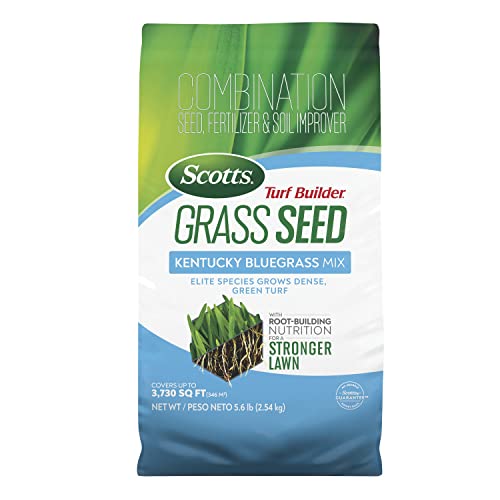 Scotts Turf Builder Grass Seed Kentucky Bluegrass Mix, 5.6 lb |
| Check price on Amazon |
Key takeaways
- Find grass seed that grows in shade and survives dry spells, with sun needs, coverage and drought tolerance compared for real lawns.
A lawn that sits under trees and bakes in summer sun asks grass seed to do two hard jobs at once. Shade starves most turf of light, while dry spells punish shallow roots, and the result is usually thin patches, bare soil and weeds moving in. Choosing seed that is bred for both conditions changes the odds, because the right blend keeps growing where ordinary seed gives up.
This guide is for homeowners with partly shaded yards, dry summers or watering limits who want a lawn that holds together through the season. The seed mixes below were chosen from their Amazon product titles and listed specifications, with attention to sunlight needs, drought resistance, coverage and the regions each blend suits. Each blend below is compared on the details that decide a purchase, so you can match the seed to the sun, soil and watering your lawn actually gets.
Quick Picks
As an Amazon Associate we earn from qualifying purchases
| Product | Best for | Key spec from title |
|---|---|---|
| Scotts Turf Builder Grass Seed Sun and Shade Mix, 5.6 lb | Mixed sun and dense shade in one lawn | Sun and shade mix with fertilizer and soil improver, 5.6 lb bag |
| Pennington The Rebels Tall Fescue Grass Seed Mix, 20 lb | Large lawns with partial shade and heavy use | Tall fescue mix, 20 lb bag, grows in partial shade to full sun |
| Jonathan Green Black Beauty Heat and Drought Resistant Grass Seed, 7 lb | Hot, dry lawns that still need deep green turf | Heat and drought resistant cool-season seed, 7 lb bag |
| Scotts Turf Builder Grass Seed Kentucky Bluegrass Mix, 5.6 lb | Light shade lawns where dense turf matters most | Kentucky bluegrass mix, 5.6 lb bag, full sun and light shade |
How to Choose
Sunlight Needs and Shade Tolerance
Sunlight needs are the first filter, because a blend that wants full sun will thin out under a maple no matter how well you water it. Measure how many hours of direct sun each part of the lawn receives, and note whether the shade is light, partial or dense. Tall fescue blends cope with partial shade on four to six hours of sun, while sun and shade mixes are built for lawns that shift between sun and dense shade through the day. Kentucky bluegrass suits light shade best and struggles where trees block most of the light. Match the blend to the shadiest section you need to cover, not the sunniest.
Drought Tolerance and Root Depth
Drought tolerance comes mostly from root depth, and deep-rooted grasses survive dry spells that kill shallow turf. Tall fescue and blends with Texas bluegrass grow roots that reach further into the soil, so they draw moisture long after the surface dries. Look for product descriptions that mention deep roots, heat tolerance and medium to high drought resistance rather than relying on the bag name alone. A blend that germinates fast but roots shallowly will look good in spring and fade by August. Give new seed a full season to establish roots before judging how it handles a dry summer.
Grass Type and Regional Fit
Grass type decides whether a blend fits your climate zone at all. Cool-season grasses such as tall fescue, Kentucky bluegrass and perennial ryegrass suit northern and transition-zone lawns, where they grow best in spring and fall. Warm-season grasses suit southern lawns, so a cool-season blend planted in a hot southern yard will struggle no matter how drought tolerant the label claims. Check the hardiness zone and planting guidance on the product page, and plant in the season the blend prefers. A blend matched to your region needs less water, less fertilizer and less reseeding than one fighting the climate.
Coverage, Bag Size and Overseeding
Coverage decides how many bags a lawn actually needs, and the figure changes between new lawns and overseeding. A 5.6-pound bag may cover roughly 745 square feet for a new lawn and more than 2,000 square feet when overseeding an existing one, so measure the lawn before ordering. Large lawns suit 20-pound bags, while small patch jobs waste money on oversized bags that go stale in storage. Overseeding an existing lawn needs less seed per square foot than starting bare soil, so use the overseeding figure when the lawn already has turf. Buy enough for one even application rather than stretching a bag thin across the whole yard.
The 4 Best Options
Scotts Turf Builder Grass Seed Sun and Shade Mix, 5.6 lb
- Best for: Lawns with mixed sun and shade where one blend must cover the whole yard.
- Bag weight: 5.6 pounds
- Sunlight exposure: Full sun and dense shade
- Drought resistance: Medium
- Durability: Medium to high
Lawns with mixed sun and shade where one blend must cover the whole yard.
Water daily until seedlings reach at least 2 inches tall, since the blend needs steady moisture during germination even though established turf handles dry spells better.
This Scotts mix is the flexible choice for lawns that mix sun, partial shade and dense shade in the same yard. It combines grass seed with fertilizer and soil improver, and it contains Root-Building Nutrition designed to help establish deep roots for thick green turf. The blend is designed for full sun and dense shade, with medium drought resistance and medium to high durability. One 5.6-pound bag covers 745 square feet for a new lawn and 2,240 square feet for overseeding, and it is best applied in spring or fall when soil temperatures sit between 55 and 70 degrees.
Watch out for: Water daily until seedlings reach at least 2 inches tall, since the blend needs steady moisture during germination even though established turf handles dry spells better.
Pennington The Rebels Tall Fescue Grass Seed Mix, 20 lb
- Best for: Large lawns with partial shade, children, pets and regular foot traffic.
- Bag weight: 20 pounds
- Grass type: Tall fescue
- Sunlight exposure: 4 to 6 hours of sun
- Sun range: Partial shade to full sun
Large lawns with partial shade, children, pets and regular foot traffic.
Check that your lawn receives at least four hours of sun, since even shade-tolerant fescue thins out in near-total shade.
Pennington The Rebels is a tall fescue built for tough conditions, with thick, deep and dense roots that support drought and traffic tolerance. It grows well in partial shade to full sun and needs four to six hours of sunlight, making it a strong fit for lawns under scattered trees. The blend withstands heavy traffic, insects, heat and drought, and it produces darker, greener and denser turf than older tall fescue types. One 20-pound bag covers up to 5,000 square feet for overseeding and 1,660 square feet for a new lawn, with results in 8 to 16 days under good conditions.
Watch out for: Check that your lawn receives at least four hours of sun, since even shade-tolerant fescue thins out in near-total shade.
Jonathan Green Black Beauty Heat and Drought Resistant Grass Seed, 7 lb
- Best for: Sunny, hot and dry lawns where deep roots matter more than shade tolerance.
- Bag weight: 7 pounds
- Grass type: Texas bluegrass and Black Beauty turf-type tall fescues
- Root depth: Up to 4 feet
- Sunlight needs: 6 to 8 hours per day
Sunny, hot and dry lawns where deep roots matter more than shade tolerance.
Do not plant this blend in deep shade, since its six-to-eight-hour sun requirement is higher than shade-first blends.
Jonathan Green Black Beauty Heat and Drought is bred for hot, dry lawns that still need a dark green look. It contains Texas bluegrass and Black Beauty turf-type tall fescues, and it grows roots up to 4 feet deep, which helps it survive heat and dry spells with less water and fertilizer than other grasses. The blend germinates in 14 to 21 days and suits the northern half of the United States, including the transition zone. It needs six to eight hours of sunlight per day, so it fits sunny, dry lawns better than heavily shaded ones.
Watch out for: Do not plant this blend in deep shade, since its six-to-eight-hour sun requirement is higher than shade-first blends.
Scotts Turf Builder Grass Seed Kentucky Bluegrass Mix, 5.6 lb
- Best for: Light-shade front lawns where dense, even turf is the main goal.
- Bag weight: 5.6 pounds
- Grass type: Kentucky bluegrass mix
- Sunlight exposure: Full sun and light shade
- Drought resistance: Medium
Light-shade front lawns where dense, even turf is the main goal.
Expect slower establishment than fast-germinating blends, and keep the soil moist through the longer germination period.
Scotts Kentucky Bluegrass Mix is the pick for light-shade lawns where a dense, fine-textured turf is the priority. It features elite Kentucky bluegrass species with Root-Building Nutrition, and it grows dense green turf with high durability. The blend is designed for full sun and light shade, with medium drought resistance, and it suits new lawns or overseeding. One 5.6-pound bag covers 1,240 square feet for a new lawn and 3,730 square feet for overseeding, and it is best planted in spring or fall when soil temperatures sit between 55 and 70 degrees.
Watch out for: Expect slower establishment than fast-germinating blends, and keep the soil moist through the longer germination period.
Which One Fits Your Situation
A Yard That Shifts Between Sun and Shade
Choose the Scotts Sun and Shade Mix. It is built for lawns where one section sits in full sun and another sits in dense shade, and its soil improver helps seed establish across varied soil. The 5.6-pound bag suits medium lawns and patch overseeding alike. Its fertilizer and soil improver also help seed settle into varied soil across the yard.
A Large Lawn with Trees, Kids and Pets
Choose Pennington The Rebels Tall Fescue. Its deep roots handle drought and traffic, and its partial-shade tolerance covers lawns under scattered trees. The 20-pound bag covers a large area, so one purchase handles a full overseeding pass. The blend recovers well from wear, so bare patches from play and pets fill in faster.
A Hot, Dry Lawn with Plenty of Sun
Choose Jonathan Green Black Beauty Heat and Drought. Roots reaching up to 4 feet deep give it an edge in dry summers, and its heat tolerance suits south-facing slopes and open lawns. Plant it where the sun reaches six to eight hours a day. Deep roots also help it stay green longer between waterings during a dry summer.
A Front Lawn Where Appearance Comes First
Choose the Scotts Kentucky Bluegrass Mix. It grows the dense, fine turf that suits a show lawn, and it handles light shade from nearby trees or a house wall. Keep it watered through establishment, and it rewards the effort with thick, even coverage. Its dense growth also crowds out weeds, which keeps the lawn looking even through the season.
Common Mistakes
- Planting a full-sun blend under dense trees and expecting it to thicken with extra water.
- Sowing in midsummer heat, when seedlings dry out before roots can establish.
- Spreading seed too thinly across a large lawn instead of covering one section properly.
- Letting the soil dry out during germination, then blaming the seed when patches stay bare.
- Skipping soil preparation and sowing onto compacted ground where seed cannot make contact.
Frequently Asked Questions
What grass seed grows best in shade and drought?
Tall fescue blends handle the combination best, because deep roots support drought tolerance while the grass still grows on four to six hours of sun. Sun and shade mixes also work for lawns that shift between sun and dense shade. Kentucky bluegrass suits light shade only, and blends bred for heat and drought need more sun, so match the seed to the shadiest part of your lawn first.
When should I plant grass seed for shade and drought?
Spring and fall are the best planting windows for cool-season blends, when soil temperatures sit between 55 and 70 degrees. Fall often works better, because soil stays warm while air cools and weeds compete less. Avoid sowing in midsummer heat, when seedlings dry out before roots establish, and avoid late fall sowing that leaves seedlings exposed to hard frost.
How much grass seed do I need for my lawn?
Measure the lawn first, then use the overseeding figure if turf already exists and the new-lawn figure for bare soil. A 5.6-pound bag of a typical Scotts mix covers about 745 square feet as a new lawn and about 2,240 square feet for overseeding. Large lawns need 20-pound bags, while small patches need only a fraction of a bag, so buy for the measured area rather than guessing.
How do I help new grass seed survive a dry summer?
Water lightly and often until seedlings reach at least 2 inches tall, then shift to deeper, less frequent watering that encourages roots to grow down. Mow high so longer blades shade the soil, and leave clippings to hold moisture. A blend with deep roots will handle dry spells better once established, but no new seed survives a drought without steady water in its first weeks.