Our Short List of 3

- Best for: duplex outlets where two timers must share one receptacle
- Type: digital plug-in timer, 2-pack
- Programs: 2 on/off programs per day
- Modes: ON, AUTO, and OFF
- Outlet: 1 side-facing outlet per timer

- Best for: two lamps or a lamp and fan sharing one socket and one schedule
- Type: mechanical plug-in timer
- Settings: 48 on/off settings in 24 hours
- Interval: 30 minutes per pin
- Outlets: 2, mounted underneath the body

- Best for: grounded plugs on fans, pumps, and small appliances
- Type: mechanical plug-in timer, 2-pack
- Cycles: up to 24 on/off cycles per day
- Interval: 30 minutes per pin
- Outlet: 1 per timer
All 5 Picks at a Glance
| Product | Specs | Action |
|---|---|---|
| BN-LINK Slim Digital Timer Outlet, 2-Pack |
| Check price on Amazon |
| TiFFCOFiO Mechanical Light Timer |
| Check price on Amazon |
| HBN 24-Hour Mechanical Outlet Timer, 2-Pack |
| Check price on Amazon |
 BN-LINK Mini Mechanical Timer, 2-Pack |
| Check price on Amazon |
 GE Mechanical Timer, 2-Pack |
| Check price on Amazon |
Key takeaways
- The best outlet timers for lamps, fans and holiday lights: slim digital, dual-outlet and mini mechanical picks with programs, intervals and load ratings.
An outlet timer looks like the simplest purchase in the home, yet the wrong one quietly fails at its one job. A two-prong timer cannot accept the grounded plug on a fan, a dial with half-hour pins cannot give an aquarium light a short midday burst, and a timer with no battery backup restarts at midnight after every outage. The real decision is matching the timer to the load it will switch: the plug shape, the schedule shape, and the electrical rating all have to fit the device on the other side.
This guide serves renters automating a first apartment, homeowners putting living-room lamps on an evening routine, and anyone running holiday lights without a nightly trip outside. The picks come from current Amazon listings and cover the main forms the class takes: one slim digital timer, a dual-outlet mechanical dial, a grounded mechanical two-pack, a mini mechanical two-pack for tight sockets, and a mechanical timer with a manual override switch.
Quick Picks
As an Amazon Associate we earn from qualifying purchases
| Product | Best for | Key spec from title |
|---|---|---|
| BN-LINK Slim Digital Timer Outlet, 2-Pack | Crowded duplex outlets in bedrooms and offices | Side-facing outlet, 2 daily programs |
| TiFFCOFiO Mechanical Light Timer | Two lamps sharing one daily schedule | Dual outlets, 48 settings per day |
| HBN 24-Hour Mechanical Outlet Timer, 2-Pack | Grounded plugs on lamps and small appliances | 3-prong grounded, 24 cycles per day |
| BN-LINK Mini Mechanical Timer, 2-Pack | Tight sockets behind furniture | Mini body, 2.3 in square |
| GE Mechanical Timer, 2-Pack | Anyone who wants a manual override switch | Override switch, 2 grounded outlets |
How to Choose
Decide between a digital program and a mechanical dial
The mechanism decides how the schedule behaves. A digital timer sets exact on and off times, holds them on a clock display, and usually keeps a small set of daily programs, which suits routines that start at a precise minute. A mechanical timer turns a dial ringed with pins or segments, repeats the same pattern every 24 hours, and asks nothing of the user beyond pushing pins down. Choose digital when the start time itself matters, such as a coffee maker at 6:40 sharp. Choose mechanical when the routine is a loose evening window and simplicity beats precision.
Match the plug and the outlet count to the load
Start at the wall. A two-prong polarized timer only accepts two-prong plugs, so a fan, pump, or appliance with a grounded three-prong plug needs a grounded timer instead. Then count what has to run: a single-outlet timer controls one device, while a dual-outlet timer runs two devices on the same schedule from one socket, which suits a pair of lamps flanking a sofa. Body shape matters too, because a wide timer can cover the second receptacle of a duplex outlet; slim and side-facing designs exist for exactly that problem.
Check the interval steps against your routine
Every timer switches in steps, and the step size limits the schedules it can express. Mechanical dials mostly move in 30-minute blocks, because each pin or segment stands for half an hour, so a lamp can start at 6:00 or 6:30 but never at 6:15. Digital timers switch at the exact minute programmed. Half-hour steps are plenty for lamps, fans, and holiday lights, where nobody notices a few minutes either way. They frustrate short, precise runs, such as a fifteen-minute watering pump cycle or a brief midday light burst for a terrarium.
Read the load ratings before motors and heaters
Each listing states maximum load figures in volts, amps, and watts, and many separate the resistive figure from lower tungsten and ballast figures for bulbs and fluorescent fixtures. The device on the timer has to stay under every figure that applies to it. Lamps, phone chargers, and small fans sit far below the limits of any pick here. Space heaters, irons, and large motors draw heavy, continuous current and belong only on a timer whose stated rating covers them, which most compact plug-in timers do not claim. When a listing states no load figures at all, keep the load light.
The 5 Best Options
BN-LINK Slim Digital Timer Outlet, 2-Pack
- Best for: duplex outlets where two timers must share one receptacle
- Type: digital plug-in timer, 2-pack
- Programs: 2 on/off programs per day
- Modes: ON, AUTO, and OFF
- Outlet: 1 side-facing outlet per timer
duplex outlets where two timers must share one receptacle
the two-prong design cannot accept grounded plugs, so check the device plug first
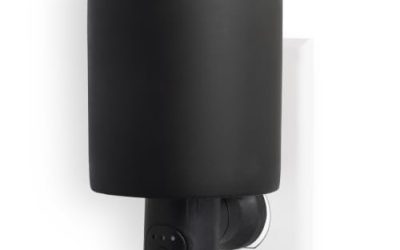
This is the pick for a crowded wall outlet. The BN-LINK Slim Digital turns its outlet to the side, so two of these timers can sit next to each other on one duplex receptacle where standard bodies would collide, and its profile stays hidden behind a nightstand or desk. It runs two on and off programs per day with ON, AUTO, and OFF modes on the face, enough for a lamp that wakes the room in the morning and lights it again at dusk. A backup battery keeps the settings for over three months while unplugged or during an outage, and the listing states quiet operation for bedrooms.
TiFFCOFiO Mechanical Light Timer
- Best for: two lamps or a lamp and fan sharing one socket and one schedule
- Type: mechanical plug-in timer
- Settings: 48 on/off settings in 24 hours
- Interval: 30 minutes per pin
- Outlets: 2, mounted underneath the body
two lamps or a lamp and fan sharing one socket and one schedule
the listing states no load figures, so keep both connected devices light
The TiFFCOFiO suits a pair of devices that always run together. Its two outlets sit underneath the body, so a lamp and a small fan, or the two lamps at either end of a sofa, plug into one timer and follow one schedule while the wall space above stays clear. The mechanical dial offers 48 on and off settings across 24 hours, each pin standing for a 30-minute interval, and the pattern repeats daily once set. There is no screen, no battery, and no menu to learn: pins down means on, pins up means off. The listing states an ETL listing for the unit.
HBN 24-Hour Mechanical Outlet Timer, 2-Pack
- Best for: grounded plugs on fans, pumps, and small appliances
- Type: mechanical plug-in timer, 2-pack
- Cycles: up to 24 on/off cycles per day
- Interval: 30 minutes per pin
- Outlet: 1 per timer
grounded plugs on fans, pumps, and small appliances
the full-size body can crowd the second receptacle on a duplex outlet
The HBN is the grounded answer in this guide. Its three-prong plug accepts the grounded cords that most basic mechanical timers refuse, which opens it to fans, pumps, and small appliances as well as lamps. The dial handles up to 24 on and off cycles per day in 30-minute intervals, set by pushing pins down for on and pulling them up for off, with no battery to replace and no program to scroll through. The listing states a full set of load figures, including separate tungsten and ballast ratings, plus an ETL listing. Two timers in the pack put two rooms on the same simple routine.
BN-LINK Mini Mechanical Timer, 2-Pack
- Best for: tight sockets behind furniture where a standard timer body will not fit
- Type: mechanical plug-in timer, 2-pack
- Size: 2.3 x 2.3 x 2.0 in per timer
- Settings: up to 24 on/off settings per day
- Interval: as small as 30 minutes
tight sockets behind furniture where a standard timer body will not fit
the two-prong plug rules out grounded devices, and the listing states no safety certification
This mini timer disappears where a full-size dial will not fit. Each unit measures about 2.3 inches square, small enough to sit behind a lamp base or inside a crowded entertainment cabinet without covering the neighboring receptacle. The dial still offers up to 24 on and off settings per day, in intervals as small as 30 minutes, and repeats the pattern daily once the pins are set. The listing states the same family of load figures as larger mechanical timers, covering lamps, compact fluorescent and LED lighting, and most small appliances. Two minis come in the pack, so a bedroom lamp and a living-room lamp can each get one.
GE Mechanical Timer, 2-Pack
- Best for: households that regularly bend the schedule for guests or early nights
- Type: mechanical plug-in timer, 2-pack
- Control: manual override switch pauses the cycle
- Interval: 30 minutes per pushpin
- Outlets: 2 grounded outlets per timer
households that regularly bend the schedule for guests or early nights
the listing states no load figures, so match it to light loads such as lamps and fans
The GE stands out for one control the other dials lack: a manual override switch. It pauses the timer cycle at any moment, so a lamp can stay on for guests or stay off for an early night without moving a single pin or losing the program underneath. Each timer carries two grounded outlets, running a pair of lamps or a lamp and a fan on the same daily pattern, and the 30-minute pushpins repeat that pattern every day with no Wi-Fi, no app, and no account. The compact body sits neatly behind furniture, and the two-pack covers two rooms at once.
Which One Fits Your Situation
Your lamps sit on a crowded duplex outlet
Pick the BN-LINK Slim Digital Timer Outlet. Its side-facing outlet is the rare design that lets two timers share one duplex receptacle, and the digital programs set exact on and off times for a morning and evening routine. The backup battery also means one power cut does not undo the setup, which matters when the outlet hides behind heavy furniture.
Two lamps flank the sofa and share one socket
Pick the TiFFCOFiO Mechanical Light Timer. Both lamps plug into its two underside outlets and follow a single dial, so the pair always switches together and the wall stays tidy. The GE Mechanical Timer also offers two grounded outlets per unit if the lamp cords carry grounded plugs and an override switch sounds useful for movie nights.
The device has a grounded three-prong plug
Pick the HBN 24-Hour Mechanical Outlet Timer. It is the grounded pick here with a full set of stated load figures, so a fan, a small pump, or a grounded lamp cord plugs in without an adapter or a guess about capacity. Its 30-minute pins cover the long daily runs those devices usually need, and the second timer in the pack handles another room.
You bend the schedule too often for pins alone
Pick the GE Mechanical Timer. The override switch lets the lamps stay on through a late evening or stay dark on a night away, then hands control back to the dial without disturbing the pins. For a routine that changes by the clock instead, the BN-LINK Slim Digital and its two daily programs are the better fit.
Common Mistakes
- Plugging a space heater or iron into a compact timer without checking that the stated resistive rating covers its draw.
- Buying a two-prong timer for a device with a grounded three-prong plug, then reaching for an adapter instead of a grounded timer.
- Setting a mechanical dial without aligning the current time marker, so the whole schedule runs hours early or late.
- Expecting a 24-hour dial to hold a different weekend routine; it repeats the same pattern every day of the week.
- Leaving a manual override switched on after guests leave, then wondering why the schedule never runs again.
Frequently Asked Questions
Can an outlet timer run a space heater?
Only when the timer’s stated load figures cover the heater’s draw, and most compact plug-in timers do not claim that. Heaters pull heavy, continuous current, which is the hardest load a small timer can switch. Check the resistive rating on the listing against the heater’s wattage, and skip the timer entirely when the figures are not stated.
Do mechanical timers keep their schedule during a power outage?
A mechanical dial stops when the power stops and resumes from wherever the dial sits, so the schedule shifts by the length of the outage until someone resets the time marker. A digital timer with a backup battery, like the BN-LINK Slim Digital above, holds both the clock and the programs through the cut.
What is the difference between an outlet timer and a smart plug?
An outlet timer switches on a schedule set at the device itself, with pins or buttons, and needs no network. A smart plug joins a Wi-Fi network and takes its schedule and commands from a phone app or voice assistant. Timers suit fixed daily routines and homes without smart gear; smart plugs suit schedules changed remotely and often.
Can one timer control two lamps at once?
Yes, when the timer carries two outlets, like the TiFFCOFiO and GE picks above. Both lamps follow the same on and off times, since one dial or program drives both sockets, and the combined draw of the two lamps has to stay under the timer’s rating. Two lamps on separate schedules need two separate timers.