Key takeaways
- A guide to 16V rechargeable battery packs: multi-output DC packs and 16V LiFePO4 deep-cycle batteries, how to match voltage and capacity, and the one pick with a verified Amazon US listing.
As an Amazon Associate we earn from qualifying purchases.
Affiliate Disclosure: This article contains affiliate links. If you buy through a link on this page, we may earn a commission from qualifying purchases made through those links, at no additional cost to you.
What a 16V Rechargeable Battery Pack Is
A 16V rechargeable battery pack is a portable power source that delivers direct current at a nominal voltage of 16 volts and can be recharged and reused many times. The label sounds simple, but it covers two very different kinds of product, and confusing them is the most common buying mistake in this category.
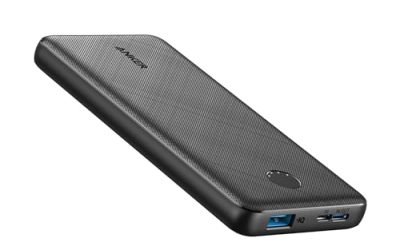
The first kind is the multi-output DC pack. These are slim lithium-ion packs, usually rated just under 100 watt-hours, with several output ports at different voltages. One of those outputs is 16 volts, and the same pack may also offer 5 volt USB power, a variable 9 to 12.6 volt output, and selectable 19 or 24 volt outputs. They are designed to power laptops, portable DVD players, digital photo frames, LED lights, cameras, and other small DC electronics away from a wall outlet.
The second kind is the 16V deep-cycle battery, usually built with lithium iron phosphate, known as LiFePO4, chemistry. These are larger, heavier batteries with capacities such as 30 amp-hours, built for marine electronics, fish finders, sonar units, GPS devices, and radar. They have a fixed 16 volt output, bolt terminals, and a built-in battery management system. They are not laptop power banks, and they are not interchangeable with the multi-output packs.
This guide explains both kinds, because the right choice depends entirely on what you need to power. A fish finder needs a deep-cycle 16V battery. A laptop that accepts 16 volt DC input needs a multi-output pack. Buying the wrong kind means the connectors will not fit, the charger will not match, or the device will not run at all.
Our Pick at a Glance
Only one product in this guide has an Amazon US listing we could tie to a specific ASIN through an indexed Amazon listing. The multi-output packs discussed below are well-known models, but no ASIN for them could be verified from a trustworthy source at the time of writing, so they are described as options to check rather than listed as buy picks. That distinction matters, and it is stated plainly here rather than hidden.
| Product | Type | Capacity | Best for |
|---|---|---|---|
| Redodo 16V 30Ah LiFePO4 | 16V deep-cycle battery | 30Ah | Fish finders, sonar, marine electronics |
Our Pick: Redodo 16V 30Ah Lithium Marine Battery
ASIN: B0DQ53494B — Candidate. The ASIN comes from an indexed Amazon US listing for this exact product. The live product page could not be read because Amazon returned an access error to the checking agent, so stock and current offer status still need a live check before buying.
The Redodo 16V 30Ah is a LiFePO4 deep-cycle battery built for marine electronics. Its model number is R16V30-30, and the listing describes it as a 16V 30Ah fishing pro lithium marine battery with Bluetooth monitoring and a built-in battery management system. It is rated for more than 4,000 deep cycles, which is the long service life that LiFePO4 chemistry is known for, and it is designed for devices such as sonar units, radar, GPS receivers, and fish finders.
Capacity is the headline figure. At 16 volts and 30 amp-hours, the battery stores about 480 watt-hours of energy. In practical terms, a fish finder drawing around 30 watts could in theory run for roughly 16 hours from a full charge, before allowing for conversion losses and the power draw of a transducer or a second display. A larger screen or a forward-facing sonar unit draws more, so run time falls accordingly. The useful habit is to divide the watt-hour figure by the watt draw of your own equipment, then treat the result as an optimistic ceiling rather than a promise.
Bluetooth monitoring is a genuine advantage for this kind of battery. The listing describes Bluetooth connectivity for checking voltage, charge state, and related readings from a phone, which is far more useful on a boat than a small LED gauge. The built-in battery management system is the other feature to look for: it is the protection circuit that guards against overcharge, over-discharge, and short circuits, and it is standard on a reputable LiFePO4 battery.
The terminals are M6 bolts, which is the detail that decides whether the battery fits your existing wiring. Measure your current battery box and cable lugs before ordering, because a 16V LiFePO4 battery is not a drop-in replacement for a 12V battery in every installation. The charging requirement is equally important. A 16V LiFePO4 battery needs a charger made for 16V LiFePO4 chemistry, and using a 12V charger, or a charger made for a different chemistry, will not charge it correctly. Check the listing to confirm whether a charger is included or must be bought separately, and confirm the charger voltage before the first charge.
One warning applies to every 16V battery in this category. Sixteen volts is not twelve volts. Do not connect a 16V battery to a device rated only for 12 volt input, and do not assume a fish finder that accepts a wide input range will accept 16 volts. Some Lowrance units, for example, are documented as needing a voltage regulator when used with a 16V battery during charging. Read the manual for your own electronics and confirm the acceptable input range before you buy.
Multi-Output 16V Packs: The Other Half of the Category
If your device is a laptop, a portable monitor, a DVD player, or a camera, the deep-cycle battery above is the wrong product. What you need is a multi-output pack, and the best-known family in this niche comes from BiXPower. Three models dominate the roundups and owner discussions for this keyword, and they deserve a clear explanation even though their Amazon ASINs could not be verified for this article.
The BiXPower BP90 is a 99.6 watt-hour lithium-ion pack, rated at about 27,000 milliamp-hours, with outputs at 5 volts over USB, a variable 9 to 12 volt DC output, and a selectable 16, 19, or 24 volt DC output. It weighs about 1.4 pounds and measures about 7.5 by 4.5 by 0.9 inches, so it is roughly the size of a small book. Its capacity sits just under the common 100 watt-hour threshold that airlines apply to spare lithium-ion batteries in carry-on baggage, which is a deliberate design choice.
The BiXPower BP90-16V is the variant built around a dedicated 16 volt main output. It stores 96 watt-hours, or about 26,100 milliamp-hours, and adds a 5 volt USB port and a variable 10 to 12.6 volt port. It has the same compact footprint and weight as the BP90. For a buyer whose device specifically needs a stable 16 volt supply, this is the most direct match in the family, because the 16 volt output is the main port rather than one setting among several.
The BiXPower BP100 is a 99.6 watt-hour pack with a hardware switch that selects between 16, 19, and 24 volt output on its main port, plus a nominal 11 volt DC output and a 5 volt USB output. The maker lists a combined maximum output of 65 watts across its ports, and the pack includes a built-in charging controller that accepts a wide charging input voltage range, which the maker describes as suitable for recharging from solar panels as well as from a wall adapter. It is slightly smaller than the BP90, at about 7.2 by 4.3 by 0.9 inches, and weighs the same 1.4 pounds.
All three packs share the same practical limitation: the output connector and the voltage must match your device exactly. A laptop that needs 16 volts will not run from the 19 volt setting, and a device that needs a different barrel size will not connect at all, even if the voltage is right. BiXPower sells interchangeable connector tips for this reason, and some of them are sold separately. Before ordering any multi-output pack, confirm the required input voltage, the connector size, and the polarity from your device manual, and confirm that the pack ships with the tip you need.
Because no ASIN for the BP90, BP90-16V, or BP100 could be verified from an indexed Amazon US listing or another trustworthy source during the research for this article, they are not presented here as linked recommendations. They are available through the maker’s own store, and they appear in other buying guides with Amazon links, so a reader who wants one should open the current listing, confirm the model code, and confirm that the listing is for the exact variant described above rather than a CPAP bundle or a bare battery without a charger. BiXPower sells the same battery cells in several packages, including CPAP kits and bare-battery versions, and those packages are not interchangeable.
How to Choose a 16V Rechargeable Battery Pack
Start with the device, not with the battery. Find the input voltage your device requires, the connector it uses, and how much power it draws. Those three facts eliminate most of the options on the market, and they protect you from the two expensive mistakes in this category: buying a 16 volt battery for a 12 volt device, and buying a pack whose connector does not fit.
Voltage is the first filter. A device rated for 16 volt DC input needs a 16 volt source. A device rated for 12 volts does not become compatible because a 16 volt battery is available. Multi-output packs solve this by offering several voltages, but you must select the right one and leave it there. Deep-cycle 16V batteries offer no selection at all, so the device must accept 16 volts as its normal input.
Capacity is the second filter, and it is quoted in two different units. Multi-output packs are usually rated in watt-hours, such as 96 or 99.6 watt-hours. Deep-cycle batteries are usually rated in amp-hours at their nominal voltage, such as 30 amp-hours at 16 volts. To compare them, multiply volts by amp-hours to get watt-hours. A 16 volt, 30 amp-hour battery stores about 480 watt-hours, which is roughly five times the energy of a 99.6 watt-hour multi-output pack. That gap reflects the different jobs: a multi-output pack runs a laptop for a few extra hours, while a deep-cycle battery runs marine electronics all day.
Runtime follows from capacity and draw. Divide watt-hours by the watts your device consumes to estimate hours, then reduce the result to allow for conversion losses and for the fact that a battery should not routinely be drained to zero. These are planning estimates, not guarantees, and the draw of your own equipment is the number that matters most.
The charger is the third filter, and it is the one buyers forget. A LiFePO4 battery needs a LiFePO4 charger at the right voltage. A lithium-ion multi-output pack usually ships with its own AC charger, but bare-battery versions do not. Check what is in the box before ordering, and check the charger input range if you plan to charge from a vehicle or a solar panel. A pack that cannot be recharged in your situation is not portable in any useful sense.
The battery management system is the fourth filter for deep-cycle batteries. A built-in management system protects against overcharge, over-discharge, short circuits, and temperature extremes. Some listings also describe low-temperature charge cut-off, which stops charging below freezing, and Bluetooth monitoring. These features are worth having on a battery that lives on a boat, where it faces vibration, moisture, and long periods between uses.
Size and weight are the final filter. A multi-output pack at 1.4 pounds fits in a laptop bag. A 16V 30Ah LiFePO4 battery is a different object entirely, with bolt terminals and a footprint that must fit a battery box or a rod locker. Measure the space first. Also remember that large lithium batteries are subject to transport rules: a 480 watt-hour battery is far above the usual carry-on limit for spare lithium batteries on passenger aircraft, so it travels by ground or by freight, not in cabin baggage.
What We Left Out and Why
Two LiTime 16V models were considered and excluded. The LiTime 16V 30Ah fish finder battery and the LiTime 16V 70Ah fish finder battery both appear on Amazon US, but the indexed Amazon listings found during research both showed no featured offers available. That is a stale signal rather than a live stock check, and it may reflect the state of the listing at the time of the crawl rather than today, but it is the only stock evidence available, and this guide does not recommend a product whose listing showed no way to buy it. Both models are worth a live check if you want a larger-capacity alternative to the Redodo pick: the 30Ah version includes a 10 amp charger in its listing title and Bluetooth monitoring, while the 70Ah version stores about 1,120 watt-hours and is aimed at tournament-grade sonar setups.
A Limitless Lithium sodium battery rated for car audio systems was also excluded. It is a 30 amp-hour battery that operates across a 10 to 16 volt range, but it is a sodium-ion car audio battery built for high-current audio systems, not a 16 volt rechargeable pack for electronics or marine use. Including it would have mixed two different product types under one keyword.
The TalentCell NB7102 power bank was excluded for a simpler reason. It is a well-reviewed rechargeable lithium-ion pack, but its outputs are 24, 19, and 5 volts over DC, plus USB-C power delivery. It has no 16 volt output, so it does not meet the keyword.
Safety Notes for 16V Lithium Batteries
Lithium batteries store a large amount of energy in a small package, and the safety rules are straightforward. Use only the charger made for your battery chemistry and voltage. Never charge a lithium battery with a charger meant for lead-acid batteries unless the charger maker states that it supports your chemistry. Never short the terminals, and keep metal tools and loose hardware away from exposed battery posts. Store the battery in a cool, dry place, and do not leave it in a hot vehicle or in direct sun for long periods.
Inspect the battery before each use. Look for swelling, cracks, damaged terminals, or a smell of chemicals. Stop using a battery that shows any of these signs, do not charge it, and take it to a battery recycling point. Do not put a damaged lithium battery in household rubbish. For multi-output packs, check the output cables and connector tips for wear, because a loose barrel connector can arc or overheat. Charging below freezing also deserves a warning for LiFePO4 batteries: many include low-temperature charge protection, but not all do, and charging a lithium battery below freezing can damage it permanently.
Frequently Asked Questions
Can I use a 16V battery to power a 12V device?
No, not directly. A device rated for 12 volt input should be powered at 12 volts. A 16 volt source can damage it. The exception is a device whose manual states an input range that includes 16 volts. Always check the manual rather than guessing from the connector shape.
What is the difference between watt-hours and amp-hours?
Watt-hours measure total energy. Amp-hours measure charge at a given voltage. Multiply volts by amp-hours to get watt-hours. A 16 volt, 30 amp-hour battery stores about 480 watt-hours. A 99.6 watt-hour multi-output pack stores far less energy, because it is a different kind of product for a different job.
Do I need a special charger for a 16V LiFePO4 battery?
Yes. A 16V LiFePO4 battery needs a charger designed for 16V LiFePO4 chemistry. A 12 volt charger will not charge it properly, and a charger for a different chemistry can damage it. Confirm the charger voltage and chemistry before the first charge, and confirm whether a charger is included in the box.
Can I take a 16V battery on a plane?
Multi-output packs rated just under 100 watt-hours are designed with the usual carry-on limit for spare lithium-ion batteries in mind, but airline acceptance is never guaranteed and rules vary by carrier. Large deep-cycle batteries such as a 480 watt-hour LiFePO4 unit are far above that limit and are not suitable as carry-on spares. Check the airline rules before travelling with any lithium battery.
The Bottom Line
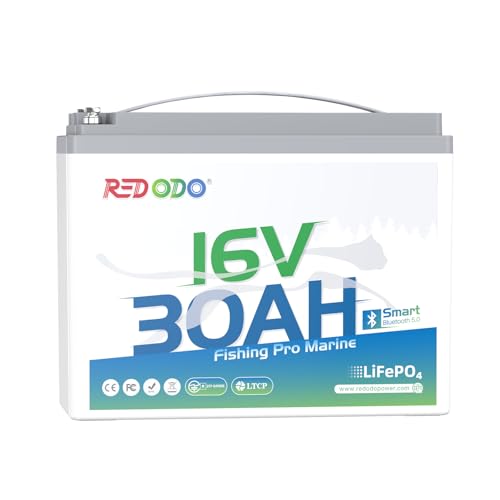
The best rechargeable battery pack 16v depends on the device you need to power. For marine electronics, fish finders, and sonar, the pick in this guide is the Redodo 16V 30Ah LiFePO4 battery, a 480 watt-hour deep-cycle unit with Bluetooth monitoring and a built-in management system, listed on Amazon US under ASIN B0DQ53494B, with stock to be confirmed by a live check before buying. For laptops and small DC electronics, the multi-output packs from BiXPower, led by the BP90-16V with its dedicated 16 volt output, are the established options, but their Amazon ASINs could not be verified for this article, so confirm the exact model and listing before ordering. Whatever you choose, match the voltage to your device, confirm the connector, and buy the right charger the first time.