Our Short List of 3


All 3 Picks at a Glance
| Product | Specs | Action |
|---|---|---|
| 1. DNA Motoring ADT-O2-T8 90-Degree O2 Sensor Defouler — DNA Motoring ADT-O2-T8 90-Degree O2 Sensor Defouler | Check price on Amazon | |
| 2. Catalyst Rear Oxygen Sensor Spacer, 90 Degree — Catalyst Rear Oxygen Sensor Spacer | Check price on Amazon | |
| 5. Oxygen Sensor Bung Adapter Kit, M18x1.5, No-Weld Mount — Oxygen Sensor Bung Adapter Kit | Check price on Amazon |
Key takeaways
- Best O2 sensor spacer with mini catalytic converter: five live M18x1.5 spacers compared — 90-degree defoulers, a catalyst spacer, and clamp-on adapters.
Disclosure: As an Amazon Associate, this site may earn from qualifying purchases made through links on this page.
Intro
An O2 sensor spacer moves the downstream oxygen sensor away from the main exhaust stream, which reduces the sensor readings that trigger a P0420 code after an exhaust change. A spacer with a mini catalytic converter adds a small catalyst element inside the spacer, so the exhaust gas that reaches the sensor passes through a small amount of catalyst first. This guide covers the best O2 sensor spacer with mini catalytic converter options sold on Amazon US, and it is honest about how thin this class is.
Only one pick in this guide has a listing title that names a catalytic element. That pick is the second one below, and its title calls it a catalyst rear oxygen sensor spacer. The other four picks are spacers, defoulers, and angled adapters in the same family. The well-known straight mini-cat spacers sold under names such as SURIEEN and KIMISS, including a 46 mm mini-cat spacer, are sold on Amazon Canada and Amazon UK, not on Amazon US, and their ASINs return a 404 on amazon.com.
All five picks below use the standard M18x1.5 thread that most oxygen sensors use, and all five were checked live on Amazon US on two separate fetches, with a working buy box on both. Four of the five are 90-degree adapters, which angle the sensor away from the exhaust pipe and suit a tight engine bay. The fifth is a clamp-on bung adapter kit that works as a spacer for extension, and it needs no welding.
Three limits apply to every pick here. First, a spacer does not repair a failed catalytic converter. It changes what the downstream sensor reads, and it is used after an exhaust change, not as a fix for a converter that has stopped working. Second, check local emissions rules before installing any of these parts, because rules on exhaust modifications differ by state and by vehicle use. Third, a spacer only helps when the code comes from the sensor reading, not from a wiring fault, an exhaust leak, or a sensor that has failed.
Measure the thread and the clearance before ordering. Most oxygen sensors use M18x1.5, but some use a different thread, and a 90-degree adapter needs room to swing clear of the pipe and the heat shield.
At a Glance
- DNA Motoring 90-degree defouler: T-304 stainless steel, M18x1.5, three flow inserts, snap ring, built for P0420 after exhaust changes.
- Catalyst rear O2 spacer: the only pick whose title names a catalyst, 90-degree, M18x1.5, built for a check engine light fix.
- 90-degree extendable adapter: M18x1.5, extendable and retractable, universal fit for compatible systems.
- 90-degree brass elbow joint: brass, M18x1.5, sold in packs of one to five, angled adapter for oxygen setups.
- Clamp-on bung adapter kit: M18x1.5, no-weld mount for round exhaust pipes, 304 stainless steel, kit with clamps and gaskets.
How to Choose
Begin with the thread. Most oxygen sensors use M18x1.5, and every pick in this guide lists that thread. Confirm the thread on the vehicle before ordering, because a spacer with the wrong thread will not fit, and a forced fit will damage the sensor bung.
Next, decide between a straight spacer and a 90-degree adapter. A straight spacer extends the sensor along the same axis as the bung, which suits a sensor with room behind it. A 90-degree adapter angles the sensor away from the pipe, which suits a tight engine bay. Four of the five picks here are 90-degree adapters, because that is the shape most listings in this class use.
Then, decide whether the catalyst element matters. A mini catalytic converter inside the spacer gives the exhaust gas a small catalyst surface before it reaches the sensor, which is the feature this keyword asks for. Only one pick here names that feature in its title, and this guide flags that pick as the weakest one. A buyer who needs a confirmed catalyst element should read that pick’s section carefully and confirm the listing before ordering.
Material matters in an exhaust part. Stainless steel resists corrosion and handles exhaust heat, and it is the material on the two strongest picks here. Brass handles heat well and resists corrosion, and it is the material on the elbow joint pick.
Flow inserts change how much exhaust gas reaches the sensor. The DNA Motoring pick includes three inserts in different sizes, so the flow can be adjusted by swapping inserts. If the code persists after fitting a spacer, a different insert size is the first thing to try, and a spacer with inserts makes that change easy.
Installation is a mechanical job, not an electronic one. The sensor unscrews from the bung, the spacer screws into the bung, and the sensor screws into the spacer. Torque the parts to the maker’s figure, and check for an exhaust leak after the first drive. A leak at the spacer will set a code of its own.
The Picks
1. DNA Motoring ADT-O2-T8 90-Degree O2 Sensor Defouler — DNA Motoring ADT-O2-T8 90-Degree O2 Sensor Defouler
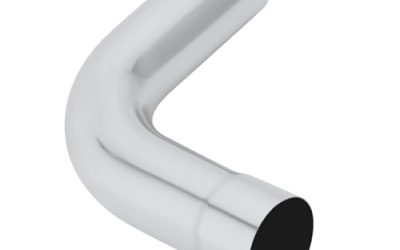
The DNA Motoring ADT-O2-T8 is a 90-degree oxygen sensor defouler in T-304 stainless steel, with M18x1.5 male and female threads. It includes three adjustable flow inserts in 1/4-inch and 3/8-inch sizes, and a snap ring that retains the inserts. The listing states that it keeps the check engine light off from a P0420 code while using decats, which means a vehicle with the catalytic converter removed from the exhaust system.
This is the strongest pick in the group, because it is the only one that names its material, its thread, its angle, and its flow adjustment in the listing. The three inserts are the practical advantage: the flow to the sensor can be changed by swapping inserts, so the spacer can be tuned to the vehicle. The snap ring keeps the inserts in place, and the T-304 stainless steel resists corrosion in the exhaust stream.
The listing states the P0420 use plainly, and this guide repeats the limit from the Intro: a defouler changes what the downstream sensor reads after an exhaust change, and it does not repair a failed catalytic converter.
Buy this defouler for a modified-exhaust vehicle that needs a 90-degree spacer with adjustable flow and a stainless steel body. Skip it for a vehicle with a stock exhaust and a working catalytic converter, where a code more likely comes from a sensor, a leak, or a wiring fault.
2. Catalyst Rear Oxygen Sensor Spacer, 90 Degree — Catalyst Rear Oxygen Sensor Spacer
This is the only pick in the group whose listing title names a catalytic element. The title reads as a catalyst rear oxygen sensor spacer, 90-degree, catalyst lambda O2 adapter, check engine light fix, M18x1.5, universal, with a 45 figure that most likely means a 45 mm length. It is the pick that matches the keyword most closely on its title alone.
The listing is also the weakest in the group, and this guide says why. The bullet copy on the listing describes sound reduction, impact resistance, and thermal deformation, which are claims about an exhaust-tone part, not about an oxygen sensor spacer. The bullets do not describe the catalyst element, the thread, or the angle, so this article uses only the title, the thread, and the angle from the listing. A buyer who needs a confirmed catalyst element should confirm the listing with the seller before ordering.
The 90-degree angle and the M18x1.5 thread match the other picks in this guide. The 45 figure in the title is not explained in the listing, so this guide treats it as a length figure that needs confirming.
Buy this spacer when the catalyst element in the title is the feature the build needs, and confirm the listing with the seller first. Skip it when the bullet copy matters more than the title, and choose the DNA Motoring defouler above instead.
3. M18x1.5 Oxygen 90-Degree Extendable Retractable Adapter — M18x1.5 Oxygen 90-Degree Extendable Adapter
This adapter is a 90-degree oxygen sensor adapter in M18x1.5 thread, with an extendable and retractable design. The listing states that the extendable movement facilitates routine equipment adjustments, that the adapter is built for easy installation, and that it is intended for universal use across compatible systems that need this adapter.
The extendable design is the feature that sets this pick apart from the fixed adapters in the group. An adapter that extends and retracts can be adjusted to the clearance around the sensor, which suits an engine bay where a fixed 90-degree adapter would foul a heat shield or a body panel. The listing does not name a material, so this guide does not claim one, and a buyer who needs a specific material should confirm it with the seller before ordering.
The listing copy is generic, and it describes the adapter in general terms rather than naming a vehicle or a code. The thread and the angle are stated, and the part was checked live with a working buy box.
Buy this adapter for a sensor that needs a 90-degree angle with an adjustable length, in an engine bay where a fixed adapter would not clear. Skip it when the material matters, and choose a stainless steel pick instead.
4. 90-Degree Brass Oxygen Elbow Joint, M18x1.5 — 90-Degree Brass Oxygen Elbow Joint
This is a 90-degree brass oxygen elbow joint in M18x1.5 thread, sold in packs of one to five pieces. The listing states that the joint is made from brass, that it has a ninety-degree angled design with extendable contraction capability, and that it serves as an automobile accessory for specific oxygen setups. The pack size is listed as one to five pieces, so confirm the pack size on the listing before ordering.
Brass is the feature here. It handles exhaust heat well, resists corrosion, and threads cleanly, which suits a part that will be removed and refitted during exhaust work. The elbow shape angles the sensor away from the pipe, which suits the same tight engine bays as the other 90-degree picks in this guide. The extendable contraction wording in the listing is not explained further, so this guide does not treat it as a confirmed dimension.
The pack size needs a plain note. The listing says the set contains one to five pieces, which means the listing covers several pack options, and the buyer must choose the right one on the listing page. Do not assume the listing is for one piece, and do not assume it is for five.
Buy this elbow joint for a sensor that needs a 90-degree brass adapter, in a pack size that matches the job. Skip it when the build needs a stainless steel part or a flow-adjustable defouler, and choose one of the picks above instead.
5. Oxygen Sensor Bung Adapter Kit, M18x1.5, No-Weld Mount — Oxygen Sensor Bung Adapter Kit
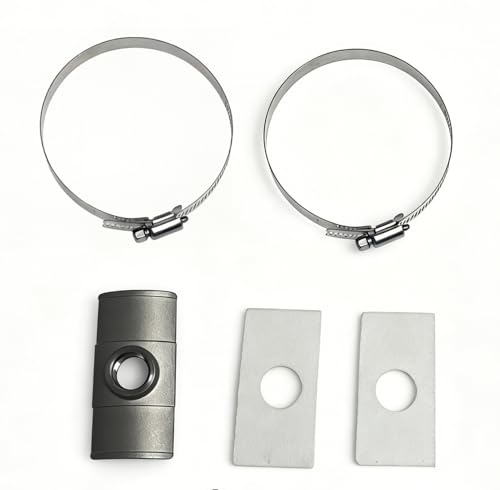
This is a clamp-on oxygen sensor bung adapter kit in M18x1.5 thread, built to work as an oxygen sensor spacer for extension. It mounts with no welding on round exhaust pipes, and it is made from 304 stainless steel. The kit includes two stainless steel clamps, one O2 bung, and two heat-resistant gaskets for a sealed installation. The listing states that the kit is built to withstand high exhaust temperatures and harsh under-vehicle conditions, and that it fits most cars, trucks, SUVs, and motorcycles.
This is the only pick in the group that needs no welding, which is the reason to choose it. A weld-in bung needs a welder and a clean pipe, and a spacer that screws into an existing bung needs a bung already in the pipe. This kit clamps onto a round exhaust pipe and gives the sensor a new mounting point, so it suits a vehicle with no spare bung, or a job where welding is not practical. The two clamps and the two gaskets are the parts that make the seal, so fit them carefully and check for a leak after the first drive.
The listing states that the kit can work as an oxygen sensor spacer for extension, which is the use this guide covers. It does not name a catalyst element, so it is not a mini-cat spacer.
Buy this kit for a vehicle with no spare sensor bung, or for a job where a clamp-on mount is easier than welding. Skip it when the pipe already has a bung, because a screw-in spacer is simpler for that job.
Comparison Table
| Pick | Thread | Angle | Material | Catalyst named | Flow adjustment | Mount |
|---|---|---|---|---|---|---|
| DNA Motoring ADT-O2-T8 | M18x1.5 | 90-degree | T-304 stainless steel | No | 3 inserts | Screw-in |
| Catalyst rear O2 spacer | M18x1.5 | 90-degree | Not stated | Yes, in title | Not stated | Screw-in |
| 90-degree extendable adapter | M18x1.5 | 90-degree | Not stated | No | Extendable | Screw-in |
| 90-degree brass elbow joint | M18x1.5 | 90-degree | Brass | No | Not stated | Screw-in |
| Bung adapter kit | M18x1.5 | Not stated | 304 stainless steel | No | Not stated | Clamp-on, no weld |
Which One Fits Your Situation
For a modified-exhaust vehicle that needs a 90-degree spacer with adjustable flow, the DNA Motoring ADT-O2-T8 is the pick, because it is the only one with flow inserts and a documented stainless steel body. It is the strongest pick in the group.
For a build that needs a catalyst element in the spacer, the catalyst rear O2 spacer is the only pick whose title names one, and it is the weakest pick in the group. Confirm the listing with the seller before ordering.
For a sensor that needs a 90-degree angle with an adjustable length, the extendable adapter is the pick, because its extendable design suits a tight engine bay where a fixed adapter would not clear. Confirm the material with the seller first.
For a sensor that needs a brass adapter, the 90-degree brass elbow joint is the pick, and the pack size must be chosen on the listing page. For a vehicle with no spare sensor bung, the clamp-on bung adapter kit is the pick, because it mounts with no welding and gives the sensor a new mounting point.
For a vehicle with a stock exhaust and a working catalytic converter, none of these picks is the right fix for a code. Diagnose the code first, and fit a spacer only after an exhaust change.
FAQ
What does an O2 sensor spacer do?
It moves the downstream oxygen sensor away from the main exhaust stream, which changes the readings the sensor sends and reduces the P0420 code that follows an exhaust change. It does not repair a failed catalytic converter.
What is a mini catalytic converter in a spacer?
It is a small catalyst element inside the spacer, so the exhaust gas that reaches the sensor passes through a small amount of catalyst first. Only one pick in this guide names that feature in its title, and the guide flags that pick as the weakest one, because its bullet copy does not match the part.
Why are the SURIEEN and KIMISS mini-cat spacers not in this guide?
Those spacers are sold on Amazon Canada and Amazon UK, not on Amazon US, and their ASINs return a 404 on amazon.com. Do not order a Canadian or UK ASIN expecting US delivery.
Will a spacer fit my vehicle?
Most oxygen sensors use M18x1.5 thread, and every pick in this guide lists that thread. Confirm the thread on the vehicle before ordering, and measure the clearance around the sensor.
What is the difference between a defouler and a spacer?
A defouler is a spacer with flow inserts or a restricted passage that changes how much exhaust gas reaches the sensor. A plain spacer extends the sensor without changing the flow. The DNA Motoring pick is a defouler with three inserts, and the other picks are plain spacers or adapters.
Do I need to weld anything?
No, for four of the five picks, which screw into an existing sensor bung. The fifth pick, the clamp-on bung adapter kit, clamps onto a round exhaust pipe and needs no welding either.
Is a spacer legal on a road vehicle?
Rules on exhaust modifications differ by state and by vehicle use. Check local emissions rules before installing any of these parts.
Final Take
The best O2 sensor spacer with mini catalytic converter search ends with an honest finding: this is a thin class on Amazon US, and only one pick names a catalyst element in its title. The DNA Motoring ADT-O2-T8 is the strongest pick in the group, with a stainless steel body, a 90-degree angle, and three flow inserts that let the spacer be tuned to the vehicle. The catalyst rear O2 spacer is the only pick that names the catalyst feature, and it is the weakest pick, because its bullet copy does not match the part, so confirm the listing with the seller before ordering.
The extendable adapter suits a tight engine bay, the brass elbow joint suits a build that needs brass, and the clamp-on bung adapter kit suits a vehicle with no spare sensor bung.
Diagnose the code before fitting a spacer, because a spacer only helps when the code comes from the sensor reading after an exhaust change. Check local emissions rules, fit the part carefully, and check for a leak after the first drive.