Our Short List of 3
All 5 Picks at a Glance
| Product | Specs | Action |
|---|---|---|
 1. TABOR TOOLS GL18A Small Bypass Lopper, 20 Inch | Check price on Amazon | |
 2. TABOR TOOLS GG11A Bypass Lopper With Compound Action, 30 Inch | Check price on Amazon | |
 3. Corona WL 6450 ClassicCUT Bypass Lopper, 33-Inch Overall Length | Check price on Amazon | |
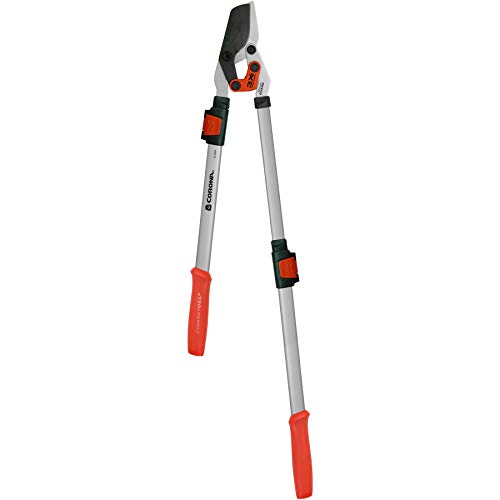 4. Corona DualLINK Extendable Bypass Lopper, SL 4364 | Check price on Amazon | |
 5. Fiskars 32-Inch PowerGear Bypass Lopper | Check price on Amazon |
Key takeaways
- The best 15 bypass loppers search leads to proven bypass models. Compare five representative bypass loppers by length, cut capacity, and blade steel here.
As an Amazon Associate we earn from qualifying purchases.
Pruning fails in a predictable place. A branch is too thick for hand pruners, so it gets forced, the cut tears, and the bark splits down the stem. Or a saw comes out for a job it is too clumsy to finish neatly inside a shrub. Bypass loppers exist for exactly that middle ground: branches roughly between finger thickness and wrist thickness, cut cleanly, at arm’s length plus the length of the handles. This guide is titled for the best 15 bypass loppers search because that is how many gardeners phrase the hunt, but it does not pretend to rank fifteen near-identical tools. Instead it presents five representative bypass loppers that cover the real range of the category, from a compact 20-inch mini lopper for close work to a long forged orchard model for thick limbs, and explains the differences that actually decide a purchase: bypass geometry, handle length, stated cut capacity, and blade steel. Every pick below is a bypass lopper, not an anvil lopper, a hedge shear, or a pole saw.
Affiliate disclosure: This article contains affiliate links. If you buy through a link on this page, we may earn a commission at no additional cost to you.
Bypass Versus Anvil: The Difference That Matters
The first decision in loppers is not brand or length. It is the cutting head, because bypass and anvil heads do different damage to a branch.
Bypass loppers have two curved blades that pass each other like scissors. One sharp blade slices past a hooked holding blade, so the cut is a slice rather than a crush. That is why bypass is the correct head for live wood: a clean slice leaves a smooth surface that a tree or shrub can seal over, with less torn bark and less crushed tissue at the cut edge. All five picks in this guide are bypass models, chosen for gardeners pruning living trees, shrubs, roses, fruit wood, and green growth.
Anvil loppers have one straight blade that closes onto a flat pad. The branch is pressed and cut against that pad, which works acceptably on dead, dry wood that is already brittle, but on live wood the pressure can crush the stem before the blade finishes the cut. An anvil head is also harder to place precisely in a tight fork, because the pad needs room behind the branch. A gardener who mostly clears deadwood may still own an anvil tool for that job, but it should not be the only lopper in a garden full of living shrubs, and none is recommended here as a substitute for the bypass picks.
Two refinements appear inside the bypass category. Simple bypass loppers use a single pivot and rely on handle length for leverage. Compound-action and geared bypass loppers add links or gears at the head that multiply hand force, which helps on thicker green branches but adds weight and moving parts. Both refinements appear below, and the entries say which design each model uses, because that choice affects effort more than small differences in stated capacity.
Handle Length, Cut Capacity, and Blade Steel
Handle length is leverage and reach together. A lopper around 20 inches long is easy to carry, easy to store, and easy to control inside a dense shrub, but it asks more of the hands on thicker wood. Models around 28 to 33 inches give noticeably more leverage and let a gardener cut higher or deeper growth while keeping feet on the ground. Extendable handles add a third option: short for control on low work, long for reach, at the cost of a heavier tool and locking mechanisms that must stay tight. Longer is not automatically better. A long lopper used overhead for an hour is tiring in a way a compact model is not.
Cut capacity is a stated maximum, not a working promise. Listings rate loppers by the thickest branch the jaws can take, from about 1.25 inches on compact models to about 2.25 inches on heavy orchard models in this guide. Those figures describe green wood under good conditions with sharp blades. Hard, dry, or knotty wood of the same diameter is a harder cut, and forcing a lopper at the top of its rating twists blades and loosens pivots. A sensible rule is to do most work comfortably below the stated maximum and to move to a pruning saw for anything that makes the handles flex or the head twist.
Blade steel decides how long the clean cut lasts. Bypass blades in this guide are described by their listings as high carbon steel, fully hardened or precision-ground steel, or fully heat-treated and forged alloy steel. Carbon and alloy steels hold a keen edge and can be resharpened, which matters because a dull bypass blade stops slicing and starts tearing, undoing the whole reason for choosing bypass. Forged blades, where the steel is compacted during manufacture, are the heavy-duty end of the range. Coatings described as non-stick or low-friction help sap slide off the blade, but they do not replace cleaning: sap and grit left on a blade after a session are what dull and corrode it fastest.
How the Picks Were Chosen
Every pick below is a bypass lopper with a stated cut capacity and handle length taken from its listing as checked for this guide. The five were chosen to span the category without repeating the same tool five times: a compact short lopper, a mid-length compound-action workhorse, a long classic forged model with wooden handles, an extendable compound model for reach, and a geared 32-inch model for thicker living growth. No anvil lopper, ratchet anvil tool, hedge shear, or hand pruner is included, even where a brand sells a well-known version, because the keyword and the garden job here are bypass cutting of live branches.
Where a listing gives conflicting figures in different fields, for example a title length that differs slightly from a dimension field, the entry uses the model’s stated overall length and cut capacity as its headline figures and keeps the description to what the listing supports. Gardeners should confirm the size option selected on the listing before ordering, because several of these models are sold in more than one length under the same product page.
The 5 Best Bypass Loppers
1. TABOR TOOLS GL18A Small Bypass Lopper, 20 Inch
This is the compact pick, for gardeners whose pruning is mostly close work. The listing describes the GL18A as a small bypass lopper, a short bypass tree trimmer of about 20 inches, with a 1.25-inch clean cut capacity. It describes the blade material as high carbon steel, the handle material as rubber, and the model as the GL18A mini bypass lopper intended for light to medium-duty cutting jobs without a lot of strain. The listing also describes a precision-ground, non-stick upper blade and cutting geometry intended to give smooth, clean cutting with good force transmission, plus grip handle covers for comfort.
A short lopper earns its place in specific places: inside a rose bush, within the frame of a small fruit tree, along a fence where long handles hit the wire, and in any garden where the tool is carried from plant to plant all morning. The trade-off is honest. With a 1.25-inch ceiling and short handles, this is not the tool for clearing thick orchard limbs, and using it as one would punish both the blade and the gardener’s shoulders. Paired with one longer lopper for heavy work, however, a compact bypass model like this is often the one that gets used most, because most real pruning cuts in a home garden are well inside its capacity.
View it on Amazon: https://www.amazon.com/dp/B010OETMLO
2. TABOR TOOLS GG11A Bypass Lopper With Compound Action, 30 Inch
This is the mid-length power pick from the same maker, and it is a different tool from the compact model above rather than a longer copy of it. The GG11A is described as a 30-inch bypass lopper with compound action, a tree trimmer and branch cutter with a 1.75-inch cut capacity, delivering clean cuts with its compound linkage. Independent listing summaries of the same model describe a weight of about 3.73 pounds, 30-inch handles, and the same 1.75-inch maximum capacity, with replacement cutting blades available for the model.
Compound action is the point of this design. The linkage at the head multiplies the force from the handles, so a green branch near the top of the capacity range can be cut with a controlled squeeze instead of a full-body heave. At 30 inches, the GG11A also reaches usefully into shrubs and small trees without the storage and overhead weight penalties of the longest models. For a gardener buying a single bypass lopper for mixed shrubs, young trees, and general yard pruning, this size and capacity combination is the natural center of the category, with the compact and heavy models in this guide as the specialists on either side of it.
View it on Amazon: https://www.amazon.com/dp/B01E5MV0LG
3. Corona WL 6450 ClassicCUT Bypass Lopper, 33-Inch Overall Length
This is the classic heavy-duty pick, built in the older orchard pattern. The listing describes the Corona WL 6450 ClassicCUT with a resharpenable, forged Radial Arc bypass blade, fully heat-treated steel alloy construction, a 2.25-inch cutting capacity, tapered bolt-on hickory handles, and a lifetime warranty. The listing’s product information gives a 33-inch overall length size option, a weight of about 3.34 pounds, an alloy steel blade, and a wood handle material. Other length options are offered on the same listing, so the size selected at purchase should be checked against the work intended.
Forged construction and resharpenability define this model’s value. A forged bypass blade holds its edge through heavy seasons and can be sharpened back rather than replaced, and bolt-on wooden handles can be swapped if one is damaged, which suits a tool bought for decades of orchard and tree work. The 2.25-inch capacity is the largest in this guide, and the long hickory handles provide the leverage to use it on green wood. The costs are weight in the hands over a long session and a tool that is plainly oversized for trimming a small shrub. Gardeners with mature fruit trees, old lilacs to renovate, or regular thick live-wood work are the audience; gardeners with only foundation shrubs will be better served by the lighter picks above.
View it on Amazon: https://www.amazon.com/dp/B001Y3OWQU
4. Corona DualLINK Extendable Bypass Lopper, SL 4364
This is the reach pick. The listing describes the Corona SL 4364 as a DualLINK extendable bypass lopper whose steel handles extend from about 27.5 inches to 37.5 inches, cutting branches up to 1.75 inches in diameter. It describes the DualLINK compound cutting system as magnifying input force so the cutting effort is reduced, a bypass blade that cuts green or dry branches, and specially coated non-stick bypass blades. The listing’s product information gives a weight of about 4 pounds, alloy steel blade and handle materials, and the SL 4364 model number.
Extendable handles solve two different problems with one tool. Collapsed, the lopper works at a normal length for low shrubs and shaping, where a fixed long lopper would be clumsy. Extended, it reaches branches that would otherwise need a step ladder, and the extra length also adds leverage for a thick cut at ground level. The compound system matters more, not less, on an extendable tool, because at full extension a gardener’s hands are farther from the head and a force-multiplying linkage keeps the cut controlled. The honest costs are the highest weight among the mid-capacity picks here and the need to keep the extension locks clean and tight. For a garden with one tall hedge line, a small orchard, or trees of mixed heights, that trade is usually worth it.
View it on Amazon: https://www.amazon.com/dp/B00GZ4OJ4I
5. Fiskars 32-Inch PowerGear Bypass Lopper
This is the geared pick for thicker living growth. The listing describes the Fiskars 32-inch PowerGear bypass lopper as a heavy-duty model with a patented mechanism that multiplies force to reduce strain, a precision-ground steel blade for living growth, and the ability to trim tree branches up to 2 inches in diameter. The model is the 32-inch member of the PowerGear lopper family, positioned between the maker’s smaller geared loppers and simple long-handled models.
A gear mechanism changes how a thick cut feels. Instead of the handles needing to travel through one long, increasingly hard squeeze, the gearing trades handle movement for force at the blade, so the hardest part of the cut arrives with mechanical help rather than grip strength alone. That makes this design a sensible choice for gardeners who know their hands tire before their pruning is finished, and for repeated cuts in the upper half of the capacity range, such as renovating an overgrown shrub or working through a small tree’s crown. At 32 inches it is a long tool, best stored hanging and best used where there is room to open the handles fully. As with every pick here, its 2-inch figure is a maximum for suitable green wood, and a pruning saw remains the right tool beyond it.
View it on Amazon: https://www.amazon.com/dp/B00004SD74
Side-by-Side Comparison
| Pick | Design | Length from listing | Cut capacity | Blade from listing |
|---|---|---|---|---|
| TABOR TOOLS GL18A | Bypass, compact | About 20 inches | 1.25 inches | High carbon steel |
| TABOR TOOLS GG11A | Bypass, compound action | 30 inches | 1.75 inches | Hardened steel, replaceable blade |
| Corona WL 6450 ClassicCUT | Bypass, forged Radial Arc | 33-inch size option | 2.25 inches | Forged alloy steel, resharpenable |
| Corona SL 4364 DualLINK | Bypass, compound, extendable | 27.5 to 37.5 inches | 1.75 inches | Alloy steel, non-stick coated |
| Fiskars PowerGear 32 inch | Bypass, geared | 32 inches | 2 inches | Precision-ground steel |
Read across the table and the buying logic is simple. Capacity rises with length and mechanism, but so do weight and awkwardness in tight growth, which is why the right answer depends on the thickest live branches a garden actually produces each year.
Using and Caring for a Bypass Lopper
Place the branch deep in the jaws, close to the pivot, rather than at the blade tips, because that is where the tool’s leverage is greatest and where the blades are least likely to twist apart. Keep the sharp blade on the side of the wood you are keeping, so any slight imperfection in the cut falls on the piece being removed. Cut in one steady squeeze where possible, and if a branch needs a second attempt, reposition rather than rocking the handles sideways, which bends thin bypass blades out of alignment over time. For a branch heavy enough to fall, make a small undercut first or support the falling piece, so its weight does not tear bark from the stem as it drops.
Care is short. Wipe sap and grit off after each session, dry the tool, and oil the pivot lightly. Sharpen only the beveled side of the cutting blade, keep the flat side flat, and tighten a loose pivot promptly, because play at the bolt becomes a tearing cut. Store loppers hanging or sheathed, not loose in a bucket.
What to Avoid
Avoid using a bypass lopper as an anvil tool on hard deadwood all season, which chips and dulls a blade designed to slice live growth. Avoid exceeding the stated capacity because a branch almost fits; the damage appears later as a sprung pivot and cuts that tear. Avoid the shortest model for orchard work and the longest model for a morning of light shrub shaping, since both mismatches end in fatigue and poor cuts. Avoid leaving sap on the blade overnight, storing the tool outdoors, or lending it for wire, roots packed with soil, or other gritty jobs that destroy a fine edge in one use. And avoid judging loppers by capacity alone: a clean 1.5-inch cut from a sharp, well-aligned bypass head is worth more to a tree than a forced 2-inch cut from a dull one.
Verdict
The best bypass loppers are matched to the wood, not bought by the biggest number. Choose the TABOR TOOLS GL18A for compact, close pruning, the TABOR TOOLS GG11A for a single compound-action lopper at the center of home garden work, and the Corona WL 6450 ClassicCUT for forged, resharpenable heavy duty on thick live limbs. Choose the Corona SL 4364 DualLINK when reach decides the job, and the Fiskars 32-inch PowerGear when geared force on branches up to its stated capacity matters most. Kept sharp, clean, and inside their capacities, any of these five will leave the smooth, sealable cuts that are the whole reason to prune with a bypass head.