Our Short List of 3


All 4 Picks at a Glance
| Product | Specs | Action |
|---|---|---|
| 1. DEWALT 20V MAX Inflator (DCC020IB) — most flexible power options | Check price on Amazon | |
| 2. Milwaukee M18 Inflator (2848-20) — best for trucks and frequent use | Check price on Amazon | |
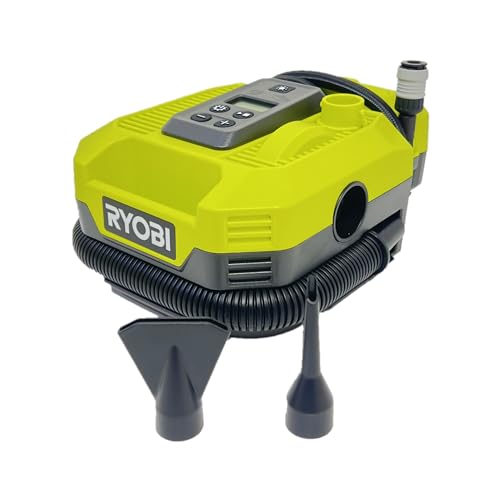
| 3. Ryobi 18V ONE+ Dual Function Digital Inflator/Deflator (PCL031B) — light and dual-purpose | Check price on Amazon | |
 4. Fanttik X8 APEX Tire Inflator — best with no tool platform | Check price on Amazon |
Key takeaways
- The best battery compressors compared: four cordless inflators from DEWALT, Milwaukee, Ryobi and Fanttik, by battery platform, max pressure, hose and auto shut-off.
As an Amazon Associate we earn from qualifying purchases.
Affiliate Disclosure: This article may contain affiliate links. If you buy through a link on this page, we may earn a commission at no extra cost to you.
What a battery compressor actually is
A battery compressor, in the sense most drivers and homeowners mean, is a cordless air compressor or inflator that runs from a rechargeable battery instead of a wall outlet or a car socket. The most common form is the cordless tire inflator: a compact pump that tops up car, SUV, motorcycle and bicycle tires, then stops automatically at the pressure you set. Some models add a second, high-volume mode that fills air mattresses, rafts and pool inflatables and can deflate them again for packing away.
It helps to be clear about what these tools are not. A cordless inflator is not a workshop compressor with a tank. It will not run a nail gun, a paint sprayer or an impact wrench, and it is not built to fill a completely flat large truck tire quickly again and again without rest. Its job is maintenance and emergencies: keeping tires at the pressure on the vehicle placard, handling seasonal top-ups, inflating sports balls and bike tires, and being ready in the trunk when a warning light comes on far from a service station.
Within that job, the four picks below cover the main ways to buy one. Three run on the big removable tool-battery platforms — DEWALT 20V MAX, Milwaukee M18 and Ryobi 18V ONE+ — so they make the most sense if you already own batteries from that brand. The fourth, from Fanttik, carries its own built-in rechargeable battery, so it needs no platform at all. All four are the same product type — cordless inflators — and all four set a target pressure and shut off automatically in high-pressure mode, which is the feature that matters most for tires.
How we chose these picks
We compared cordless inflators on the details published by their manufacturers and on their Amazon US listings: battery platform and whether a battery is included, maximum pressure, hose length and chuck type, automatic shut-off and gauge style, high-volume or deflate modes, weight, and included adapters such as Presta valves for bicycles and needles for sports balls. Specifications below come from the manufacturer and listing information for each model; we did not test these units ourselves, and we do not present maker speed claims as our own measurements.
One warning applies to this whole category: maximum pressure is a ceiling, not a working speed. A rating of 150 or 160 PSI means the pump can reach that pressure, which covers high-pressure bicycle tires. A normal car tire needs only a fraction of that. What decides how a unit feels in daily use is how steadily it adds a few PSI, how accurate its gauge is, how long its hose is, and whether it stops where you told it to.
The picks at a glance
- DEWALT 20V MAX Inflator (DCC020IB) — best for DEWALT owners who want backup power options, because it also runs from a vehicle socket and a wall outlet, and it adds high-volume inflation and deflation.
- Milwaukee M18 Inflator (2848-20) — best for pickup and light-truck tires, with a long hose, a brass chuck and an automatic pressure-checking system with memory presets.
- Ryobi 18V ONE+ Dual Function Digital Inflator/Deflator (PCL031B) — best for Ryobi owners who want tires and air mattresses handled by one light tool.
- Fanttik X8 APEX Tire Inflator — best for drivers with no tool batteries, a self-contained rechargeable inflator that lives in a glovebox or trunk.
1. DEWALT 20V MAX Inflator (DCC020IB) — most flexible power options
The DEWALT DCC020IB is a corded and cordless inflator built around the 20V MAX battery platform, and its defining feature is that the battery is only one of three ways to run it. It also works from a 12V vehicle socket using the included cord, and from a wall outlet with an adapter sold separately. If the tool battery is flat at the roadside, the other options keep the pump working, which none of the other platform inflators here can match.
In high-pressure mode the DEWALT is rated to a maximum of 160 PSI. You set the target on the digital gauge and the unit shuts off automatically when it reaches that pressure in this mode. The high-pressure hose uses a threaded chuck that screws onto the tire valve, which seals securely, though it takes a few seconds longer to fit than a clip-on lever chuck. An LED light on the unit helps with valves after dark, and heavy rubber feet keep the body from walking across the ground while it runs.
The second mode is what separates this model from a pure tire pump. A separate high-volume hose fills large, low-pressure items such as air mattresses, rafts and pool floats, and moving that hose to the deflation port pulls air back out, so a mattress packs down flat instead of staying half full of trapped air. Note that the automatic shut-off belongs to the high-pressure mode; the high-volume mode runs until you stop it, so stay with the item while it fills.
This listing is the tool only. No battery, charger or wall adapter is in the box, so it is best value for someone who already owns DEWALT 20V MAX or compatible FLEXVOLT packs. In the box you get the inflator, the 12V DC power cord, a high-pressure tapered nozzle, a Presta valve adapter and an inflator needle for sports balls.
Choose the DEWALT if you already run its batteries and want one inflator for tires, bike tires, balls and camping mattresses, with a backup power plan. Skip it if you own no DEWALT batteries and do not want to buy into a platform for a single tool — the Fanttik below is simpler in that case.
2. Milwaukee M18 Inflator (2848-20) — best for trucks and frequent use
The Milwaukee 2848-20 is the heavy-duty entry in this group, built on the M18 battery platform and aimed at people who inflate tires as a routine rather than an occasional emergency. Milwaukee describes it as optimised for passenger, light-truck and other medium-duty tires, and rates it to top off a 33-inch light-truck tire in under a minute under its stated conditions. That is a manufacturer claim, not a figure we measured, but it signals the intended class: this is a faster, larger pump than a glovebox inflator.
Its maximum pressure is 150 PSI. The control system is the headline. Milwaukee’s TrueFill technology automatically checks the tire’s actual pressure as the fill progresses and stops at the target you selected, which reduces the familiar overshoot, check, and bleed-off routine. Four memory slots store the pressures you use most — for example a car, a truck, a trailer and a bicycle — so repeat jobs start with a selection instead of a fresh setting each time.
Hardware is a step up as well. The hose is 36 inches long, noticeably longer than the hoses on the other picks, which matters on truck and trailer valves where a short hose forces you to hold the unit in the air. The Schrader chuck is all brass and threads on securely. The inflator needle, inflator nozzle and Presta chuck are included and store on the tool.
The trade-offs are size and platform. At around seven pounds before a battery is fitted, this is a garage shelf or truck bed tool, not something that disappears into a small car. It is sold as a tool only, so M18 batteries and a charger are separate purchases for anyone new to the platform.
Choose the Milwaukee if you run M18 tools, look after several vehicles or a light truck, and value fill speed, hose reach and pressure accuracy over compact size. Skip it if you only top up one small car a few times a year; it is more tool than that job needs.
3. Ryobi 18V ONE+ Dual Function Digital Inflator/Deflator (PCL031B) — light and dual-purpose
The Ryobi PCL031B covers the same two jobs as the DEWALT — high-pressure tires and high-volume inflatables — in a lighter body on the 18V ONE+ platform. It weighs under three pounds as a bare tool, so it is easier to carry to a bicycle, a trailer or a campsite than either of the larger platform units above.
High-pressure mode is rated to a maximum of 160 PSI. You preset the pressure on the digital gauge and the inflator stops automatically at that setting, so you can attach it and let it work hands-free. The high-pressure hose is 24 inches long and uses a quick-connect chuck. Ryobi lists high-pressure airflow figures in its manual; as with every inflator here, expect a few minutes for a large top-up rather than instant results, and follow the manual’s cooling guidance for continuous use — run the unit in short bursts with rest periods instead of one long session on several flat tires.
High-volume mode is rated at up to 16 SCFM in the manufacturer’s description, which is the mode for air mattresses, pool toys and other large inflatables, and the tool also deflates through its separate port and hose, with a shorter 14-inch high-volume hose. The pressure preset and automatic stop belong to the high-pressure hose; the volume mode is stopped manually, so do not walk away from a filling mattress.
The PCL031B is sold as a tool only, with the sports needle, Presta valve adapter and pinch valve adapter included and stored on board, plus a digital pressure gauge you can read at a glance. A battery and charger are not included in this listing. Ryobi also sells kit versions with a battery, so check carefully which version a listing describes before you buy, and do not assume a kit’s contents apply to the bare tool.
Choose the Ryobi if you already own ONE+ batteries and want one light inflator that handles tires on Saturday and an air mattress on Sunday. Skip it if your main job is frequent light-truck work, where the Milwaukee’s hose, chuck and duty are better matched.
4. Fanttik X8 APEX Tire Inflator — best with no tool platform
The Fanttik X8 APEX takes the opposite approach to the three platform tools: the battery is built in, so there is nothing else to own. Its internal rechargeable battery is rated at 7,800 mAh, it charges over USB, and Fanttik quotes up to 40 minutes of continuous runtime. That makes it the natural pick for a driver who has no power-tool batteries and simply wants a complete inflator to keep in the car.
The maximum pressure is 150 PSI, with airflow quoted by the maker at 32 litres per minute. A dual screen shows the current pressure and the target pressure together, and there are preset modes for common uses — car, motorcycle, bicycle and ball — plus a custom mode where you set the pressure yourself across the working range. Like the other picks, it shuts off automatically at the set pressure, and an LED light is built in for night use. Adapters for the common valve types are included, and the compact body, under two pounds, fits a glovebox, a door pocket or a small trunk kit in a way none of the platform tools can.
The built-in design carries two honest limits. First, when the battery is empty the inflator cannot be revived by swapping in a fresh pack; it must be recharged, which takes hours rather than seconds, so the habit that makes it work is charging it after use and checking it before a long trip. Second, it is a top-up and emergency tool for car and smaller tires, not a substitute for the larger platform pumps if you regularly inflate several large tires in a row.
Choose the Fanttik if you want a self-contained inflator with no platform commitment and the smallest storage footprint. Skip it if you already own a shelf of DEWALT, Milwaukee or Ryobi batteries; a platform inflator will give you swappable power and, in the Milwaukee’s case, a longer hose and faster truck-tire work.
Battery compressor buying guide
Start with the battery you already own
For platform inflators, the battery is the decision. The inflator body is the smaller part of the system; the packs and charger are the larger one. If your garage already runs one brand’s batteries, buy that brand’s inflator. If you own none, either buy a kit version that includes a battery and charger, or choose a built-in model like the Fanttik and avoid the platform question entirely. Never assume a bare tool listing includes a battery — three of the four picks here do not.
Match the tool to the tire
Write down the largest tire you will actually inflate and how often. Occasional top-ups on a passenger car suit any pick here. Regular work on light-truck or trailer tires favours the Milwaukee, with its longer hose, brass chuck and pressure-checking system. High-pressure bicycle tires are covered by every pick, since all four reach at least 150 PSI, but check that a Presta adapter is included — it is, on all four.
Automatic shut-off is the feature to insist on
Setting a target and letting the pump stop itself prevents over-inflation, frees your hands, and makes four-tire sessions far less tedious. All four picks have it in high-pressure mode. Remember that high-volume modes on the DEWALT and Ryobi do not stop automatically; they fill mattresses and floats until you switch them off.
Hose length and chuck type matter more than headline pressure
A short hose means holding the pump off the ground while it vibrates; a longer hose lets it sit flat. A threaded chuck seals well and is common here, while a quick-connect chuck is faster to fit. If you inflate trailer or dual rear wheels, hose reach moves from a convenience to a requirement.
Duty cycle and heat
Small compressors get hot. Manufacturers specify run and rest periods in their manuals, and ignoring them shortens the tool’s life or triggers a thermal shutdown mid-job. Inflate in the maker’s stated bursts, let the unit cool between tires on a big job, and never leave a running inflator unattended.
Safety basics
Inflate tires cold, to the pressure on the vehicle’s door placard or the trailer’s rating plate — not the maximum figure moulded into the tire sidewall. Keep hands away from the hose and chuck as you disconnect, stand to the side rather than over the tire, and stop and seek help if a tire has visible sidewall damage, a damaged rim, or will not hold pressure; an inflator cannot fix a failed tire, and a tire losing air quickly has a puncture that needs repair, not repeated top-ups.
Frequently asked questions
Is a battery compressor the same as a tire inflator?
In this category, largely yes. The products sold as cordless compressors for drivers are inflators: small pumps without a storage tank, designed for tires and inflatables. A true tank compressor for air tools is a different, larger product, and a battery inflator should not be bought for that work.
Can a cordless inflator fill a completely flat tire?
Usually yes for a passenger car tire that is flat because of a slow leak or a bead that still seals, but it will take longer and may need rest periods for cooling. If the tire is off the bead, damaged, or losing air as fast as you add it, the tire needs professional repair instead.
How long does the battery last?
It depends on the pack size, the tire size and how much pressure you add. Platform tools run as long as your battery system allows, and you can swap packs. The built-in Fanttik is quoted by its maker at up to 40 minutes of continuous runtime, which covers multiple car tire top-ups when used in normal short sessions.
Do I need the maximum PSI figure to be high?
Only for high-pressure bicycle tires and a few specialist uses. Car and light-truck tires live far below the ceilings of all four picks. Gauge accuracy, automatic shut-off and hose reach will affect you more than the difference between a 150 and a 160 PSI ceiling.
The bottom line
For most drivers, the best battery compressor is the one that matches the batteries already in the garage. DEWALT owners get the most flexible tool in the DCC020IB, with vehicle and wall power as backup and a genuine deflate mode. Milwaukee owners who work on trucks get the fastest, longest-reach option in the 2848-20, with pressure checking and memories. Ryobi owners get the lightest dual-purpose tool in the PCL031B. And drivers with no platform at all get the simplest answer in the Fanttik X8 APEX: charge it, store it in the car, and let its automatic shut-off handle the top-ups.