Our Short List of 3


All 4 Picks at a Glance
| Product | Specs | Action |
|---|---|---|
| 1. WEIZE Platinum AGM Battery, BCI Group 49 (H8) — best for most Sprinter owners | Check price on Amazon | |
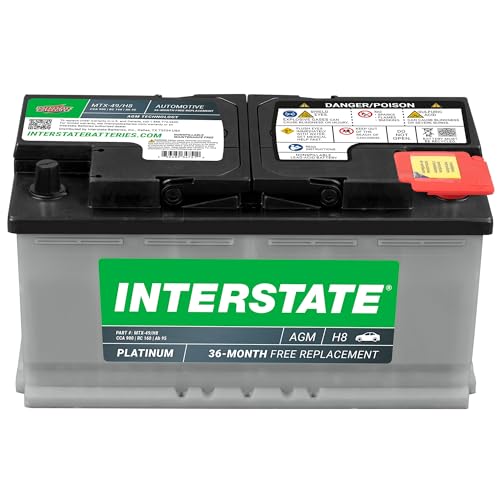
| 2. Interstate Batteries MTX-49/H8 — best for buyers who want an established battery brand | Check price on Amazon | |
| 3. Mighty Max Battery MM-H8 — best value Group 49 AGM for start-stop vans | Check price on Amazon | |
 4. 1AUTODEPOT BCI Group 49 Car Battery — a direct maintenance-free AGM alternative | Check price on Amazon |
Key takeaways
- The best Sprinter battery picks for Mercedes-Benz Sprinter vans: Group 49 (H8) AGM batteries compared on CCA, reserve capacity, fitment and warranty.
As an Amazon Associate we earn from qualifying purchases.
Affiliate Disclosure: This article contains affiliate links. If you buy through a link on this page, we may earn a commission at no extra cost to you.
Introduction
In this article, “Sprinter” means the Mercedes-Benz Sprinter van — the cargo, crew, passenger and camper-conversion van sold as the Sprinter 1500, 2500, 3500 and 3500XD. It does not mean a battery for sprinting, a different Dodge or Freightliner product with a similar name, or a generic van battery that happens to be on sale. Getting that definition right matters, because the Sprinter asks more of its 12-volt battery than most vehicles do. The battery lives inside the cabin, under the driver-side floor area on many model years, it has to crank a diesel engine with high compression on cold mornings, and on later vans it also has to support start-stop cycling and a long list of electronic modules that stay awake long after the key comes out.
The good news is that Sprinter fitment is more predictable than the van’s many configurations suggest. Most Sprinters from the NCV3 generation (2007–2018) and the current VS30 generation (2019 onward) use a BCI Group 49 battery, also called an H8, in absorbed glass mat (AGM) form. Some V6 diesel configurations were built with the smaller Group 48 (H6) instead, which is why the first step in this guide is always to read the label on the battery already in your van. Every pick below is a Group 49 (H8) AGM battery, because that is the most common Sprinter fitment and the size this guide is written for. If your van’s label says Group 48, do not order from this list — buy the same brands’ Group 48 equivalent instead.
We compared Group 49 AGM batteries on the specifications published on their product pages: cold cranking amps, amp-hour capacity, reserve capacity, dimensions, terminal layout and warranty terms. We did not test these batteries ourselves, and no specification below comes from anywhere other than the manufacturer’s or retailer’s published listing for that exact model. Battery availability and exact specifications can change, so confirm both on the product page before you order.
Quick comparison
| Pick | Best for | Group | Capacity | CCA | Reserve capacity |
|---|---|---|---|---|---|
| WEIZE Platinum AGM Group 49 | Most Sprinter owners | 49 (H8) | 95 Ah | 900 | 160 minutes |
| Interstate MTX-49/H8 | Buyers who want a long-established battery brand | 49 (H8) | 95 Ah | 900 | See listing |
| Mighty Max MM-H8 | Start-stop vans on a tighter budget | 49 (H8) | 95 Ah | 900 | 160 minutes |
| 1AUTODEPOT BCI Group 49 | A straightforward maintenance-free AGM swap | 49 (H8) | 95 Ah | 900 | 160 minutes |
The picks
1. WEIZE Platinum AGM Battery, BCI Group 49 (H8) — best for most Sprinter owners
The WEIZE Platinum AGM in Group 49 is the pick we would point most Sprinter owners to first, because its published specifications line up almost exactly with what the van’s under-floor tray and diesel starter ask for. The listing describes a 12-volt AGM battery rated at 95 amp-hours, 900 cold cranking amps and 160 minutes of reserve capacity, in the Group 49 (H8) case measuring about 13.9 inches long, 6.89 inches wide and 7.48 inches high. Those are the standard H8 dimensions, so the battery should sit in the Sprinter’s tray the way the original does, with the hold-down and vent arrangement lining up as designed.
Nine hundred cold cranking amps is comfortably above the minimum a Sprinter diesel needs, which matters on the mornings that actually kill batteries: a cold-soaked van, thick oil, glow plugs drawing current before the starter even turns. The 160-minute reserve capacity is equally relevant for camper conversions and work vans, because it describes how long the battery can keep supplying a moderate load if the alternator stops charging — long enough to run lights and accessories while you deal with the problem rather than being stranded in the dark immediately.
WEIZE lists this battery as a start-stop AGM design and backs it with a 36-month warranty according to the product title. The sealed AGM construction is the right chemistry for a battery mounted inside the cabin: there is no free liquid acid to spill, and the absorbed electrolyte design tolerates the vibration of a tall van on rough roads better than a conventional flooded battery. Terminal position is worth checking against your old battery before ordering, as with any H8 battery, since cable reach under the Sprinter’s floor panel is not generous.
Choose this one if you want a single, well-specified Group 49 AGM that matches the Sprinter’s original equipment ratings on capacity, cranking power and reserve time without paying for a premium badge.
2. Interstate Batteries MTX-49/H8 — best for buyers who want an established battery brand
Interstate is one of the oldest names in replacement batteries in North America, and the MTX-49/H8 is its AGM offering in the Sprinter’s size. The Amazon listing describes an automotive AGM battery in Group Size H8 (49), rated at 12 volts and 95 amp-hours with 900 cold cranking amps, under the model number MTX-49/H8. That specification set — H8 case, 95 amp-hours, 900 CCA — is the same core recipe as the rest of this list, which is exactly what you want: the Sprinter does not reward exotic batteries, it rewards correct ones.
Where a brand like Interstate earns its place is in consistency and support. Interstate batteries are sold and serviced through a wide dealer network, so if you prefer to have a warranty claim handled by a local shop rather than by shipping a heavy battery back to an online seller, that network is a practical advantage worth weighing. The MTX line is Interstate’s AGM range intended for vehicles with high electrical demand, which describes a modern Sprinter well: power sliding doors on passenger vans, rear climate systems, liftgates and refrigeration on work vans, and the house loads that bleed into the starting battery on some camper builds.
Fitment discipline still applies. Confirm that your van takes the H8 case rather than the smaller H6, confirm the terminal orientation matches your cables, and check the listing’s stated warranty terms and reserve capacity figure at the time you buy, since those details are set by the seller’s current listing. If they match your old battery’s label, the MTX-49/H8 is a conservative, well-supported choice.
Choose this one if brand support and a physical service network matter more to you than squeezing the last bit of value out of an online-only brand.
3. Mighty Max Battery MM-H8 — best value Group 49 AGM for start-stop vans
The Mighty Max MM-H8 is a Group 49 AGM battery sold under the model number MM-H8, and its published specifications mirror the class standard: 12 volts, 95 amp-hours of capacity, 900 cold cranking amps and 160 minutes of reserve capacity, in a sealed, rechargeable AGM case described by the seller as a start-and-stop battery. Mighty Max sells this same MM-H8 unit across many vehicle-specific listings, so do not be confused if the listing you land on names a different vehicle in its title — what matters is the model number, the Group 49 size and the specifications, not the vehicle named in a particular listing variant.
For Sprinter owners, the appeal is straightforward. Camper conversions and high-mileage work vans go through batteries faster than ordinary cars, because the starting battery often ends up supporting more cycling than it was installed for. A value-priced AGM with full H8 specifications softens the cost of that replacement cycle without dropping down to a smaller group size or a flooded battery that does not belong in the cabin. The sealed AGM design also means no watering, no acid handling, and no corrosion creeping across the terminals under the floor panel where you would not notice it until the van failed to start.
Two cautions apply. First, Mighty Max is an online-first brand, so warranty handling generally means working through the seller rather than walking into a shop; read the current warranty terms on the listing before you buy. Second, because the same model is listed for many vehicles, use Amazon’s fitment checker only as a rough guide and rely on your old battery’s group size label as the deciding evidence.
Choose this one if your Sprinter eats batteries on a work or camper duty cycle and you want full Group 49 AGM specifications at a value-oriented position in the market.
4. 1AUTODEPOT BCI Group 49 Car Battery — a direct maintenance-free AGM alternative
The 1AUTODEPOT Group 49 battery is another H8-case AGM built to the same specification pattern: the listing describes a 12-volt, 95 amp-hour premium maintenance-free AGM battery with 900 cold cranking amps and 160 minutes of reserve capacity, under the model number BAB-0072. For a Sprinter, that means diesel-grade cranking power and enough reserve to support the van’s electronics during long stops, in the case size the under-floor tray was designed around.
1AUTODEPOT positions its batteries as fit-and-forget replacements, and the maintenance-free AGM format suits that claim: there are no caps to open, no electrolyte level to check, and the sealed case can be installed in the Sprinter’s enclosed battery compartment with its vent connection as designed. Like the other picks here, it is a starting battery first — it is not a deep-cycle house battery, and camper owners should keep a separate auxiliary battery for overnight loads rather than draining any starting battery on this list down night after night. Repeated deep discharge is the fastest way to shorten the life of a starting AGM, whichever brand is on the label.
As with the Mighty Max, this is an online-marketplace brand, so read the seller’s current warranty and return terms on the product page, and photograph your old battery’s label before you order so you can compare group size, dimensions and terminal positions side by side.
Choose this one if you want a fourth quote against the same specification sheet — same group, same capacity class, same cranking rating — and prefer the seller terms attached to this listing.
How to confirm your Sprinter’s group size before ordering
Everything in this guide depends on one fact: the group size printed on your current battery. Sprinter production used more than one size, and assuming is how owners end up with a battery that will not fit under the floor panel. Work through these checks in order.
First, read the old battery. The group size — 49 (H8) or 48 (H6) on most Sprinters — is printed on the top or side label, along with the original capacity and cranking ratings. Photograph the whole label; it is your reference for every comparison that follows.
Second, measure the tray if the label is unreadable. A Group 49 (H8) case is roughly 13.9 inches long, 6.9 inches wide and 7.5 inches high. A Group 48 (H6) is noticeably shorter in length. If your tray and hold-down match the longer case, you have an H8 van.
Third, match the chemistry. If the original battery is AGM — and on Sprinters it almost always is — the replacement must be AGM. Mercedes calibrates the charging system for AGM voltage characteristics, and a flooded battery in a cabin-mounted compartment is the wrong part on both electrical and safety grounds. Every pick in this guide is AGM for that reason.
Fourth, check terminal layout and venting. The terminals must land where your cables reach, and the vent connection must be reattached so any vented gas is routed as the factory intended. Finally, on VS30 vans (2019 onward), plan for battery registration with a suitable scan tool after installation, so the van’s battery management knows a new battery is fitted and charges it on the correct profile.
What the specifications actually mean for a Sprinter
Cold cranking amps (CCA) describe how much current a battery can deliver for 30 seconds at 0 degrees Fahrenheit while holding voltage above a minimum threshold. Diesel Sprinters are hard to crank — high compression, a large starter and glow plugs that draw power before cranking — so the 900 CCA class of the batteries above gives a healthy margin over the van’s minimum requirement, and that margin is what remains as the battery ages and its output slowly falls.
Amp-hour capacity describes the size of the tank, electrically speaking: 95 amp-hours is the standard H8 capacity and supports the Sprinter’s standby loads — modules, telematics, keyless systems — during days parked at a job site or an airport. Reserve capacity, stated in minutes, is a related real-world measure: how long the battery can carry a 25-amp load before its voltage falls too low. The 160-minute figure shared by most picks here is typical for a healthy H8 AGM and is the number that matters if your alternator fails an hour from home.
None of these numbers rescues a battery from the two things that actually kill Sprinter batteries early: chronic undercharging on short-trip duty, which sulfates any lead-acid battery, and parasitic drain from upfitter equipment wired to the starting battery instead of an auxiliary battery. If your van regularly sits, a maintenance charger on the starting battery will do more for battery life than any brand choice on this page.
Installation notes
The Sprinter’s main battery is accessed through the driver-side floor area on most model years rather than from the engine bay, and it is heavy — an H8 AGM weighs well over 50 pounds — so plan the lift before you start. Disconnect the negative terminal first, keep the vent tube connection in mind as you lift the old unit out, and clean the terminals and hold-down hardware before the new battery goes in. Reconnect, reattach the vent, refit the hold-down firmly (a loose battery in a floor well will chafe and vibrate), and then set the clock and, on newer vans, complete the battery registration procedure and clear any low-voltage fault codes that the old battery’s decline stored.
Work vans and campers with auxiliary batteries add one step: confirm which battery you are actually replacing. Many conversions have a second battery under the passenger seat or in the rear, and the starting and house batteries are not always the same group size.
Frequently asked questions
What group size battery does a Mercedes Sprinter use?
Most Sprinters use a BCI Group 49 (H8) AGM battery; some V6 diesel configurations use Group 48 (H6). Always confirm from the label on the battery already installed, because both sizes appear across Sprinter production.
Does a Sprinter need an AGM battery?
Yes, if it was built with one — and Sprinters are. The charging system is calibrated for AGM characteristics, and the battery is mounted inside the cabin, where a sealed AGM case is the appropriate design.
How long should a Sprinter battery last?
Service life depends on duty cycle, climate and charging habits. Heat, short trips and long parked periods with standby drain shorten it; regular full charging lengthens it. Treat any specific lifespan claim with caution and rely on the warranty term stated on the listing of the battery you buy.
Can I use one of these as a camper house battery?
These are starting batteries. They can tolerate occasional moderate discharge, but a camper’s nightly loads belong on a dedicated deep-cycle or lithium auxiliary battery, with the starting battery kept in reserve for starting.
Do I need to register the new battery?
On the current VS30 generation, yes — battery registration with a scan tool is part of a correct installation, so the battery management system applies the right charging profile to the new unit.
Bottom line
For most Mercedes-Benz Sprinter owners, the WEIZE Platinum AGM Group 49 (ASIN B0CBQ31KYP) is the cleanest match to the van’s original specifications. The Interstate MTX-49/H8 (ASIN B0BH8D85S7) suits buyers who value an established brand and dealer network, while the Mighty Max MM-H8 (ASIN B0D1DSZMHS) and the 1AUTODEPOT Group 49 (ASIN B0D9QK32WQ) cover the same H8 specification sheet from online value brands. Whichever you choose, confirm the group size on your old battery’s label first — that single check prevents nearly every Sprinter battery buying mistake.