Key takeaways
- The best small-form-factor gaming desktops for game streaming: compare three mini PCs with RTX graphics, fast CPUs and 1TB SSDs for a compact stream desk.
A streaming desk has two jobs competing for the same square footage: the game itself, and everything that turns gameplay into a broadcast — capture software, overlays, a chat window, a microphone, a camera, and usually a second monitor. A full-size tower handles the workload easily, but it also eats the desk or the floor space beside it. That is why the best small-form-factor gaming desktops for game streaming have become a practical category rather than a novelty: a mini PC with a dedicated graphics card and a high-core-count processor can run the game and the stream from one compact box that sits behind a monitor or on a shelf. The three desktops compared here were selected from their published listing specifications — the processors, graphics cards, memory and storage printed on their Amazon product pages — not from detailed research, and each one pairs a dedicated NVIDIA RTX GPU with at least 16GB of DDR5 memory and a 1TB SSD.
As an Amazon Associate, we earn from qualifying purchases.
Quick answer
If you want the strongest all-round hardware of the three, the AtomMan G7 Ti pairs an Intel i9-14900HX with a dedicated RTX 4070 and 32GB of DDR5 — the most CPU headroom here for running a game and encoding software side by side. If you prefer the newest platform in the smallest brand-name chassis, the ASUS ROG NUC (2025) combines a Core Ultra 9 275HX with an RTX 5070 Mobile and fast DDR5-6400 memory. If your streams are built around esports and popular competitive titles rather than maximum settings, the ASUS ROG NUC 760 steps down to a Core Ultra 7 155H and RTX 4060 while keeping the same 1TB storage. All three are mini PCs, so all three free up the desk space a tower would take.
Key takeaways
- Every pick uses a dedicated NVIDIA RTX graphics card rather than integrated graphics, which is the single most important hardware trait for a PC that has to play and stream at the same time.
- CPU headroom matters for streaming: the two 32GB models with top-tier processors leave more room for broadcasting software, browser tabs and chat tools running alongside the game.
- All three desktops ship with a 1TB SSD, so storage is not a differentiator here — the choice comes down to processor tier, GPU tier and memory.
- Small-form-factor desktops trade internal expansion room for size, so they suit streamers who want a finished, compact setup rather than a machine they plan to rebuild piece by piece.
The picks
1. AtomMan G7 Ti

The AtomMan G7 Ti is the hardware heavyweight of this group. Its published specification lists an Intel i9-14900HX processor — a high-end mobile-class chip with the kind of core count that suits multitasking — alongside a dedicated NVIDIA RTX 4070 with 8GB of graphics memory. For a streaming workload that pairing is the point: the game can lean on the GPU while the processor keeps broadcasting software, voice chat and a browser full of dashboard tabs moving without fighting the game for resources. With 32GB of DDR5 memory, there is also comfortable room for the memory-hungry combination of a modern game plus streaming applications.
The storage side is straightforward: a 1TB SSD gives space for a working library of games plus recorded footage, which matters because streamers accumulate local recordings quickly. As a mini PC, the G7 Ti is built for desks where a tower would crowd out monitors and audio gear. It is the natural first look for a streamer who plays demanding titles and wants one compact machine to carry the whole production rather than splitting gaming and streaming across two computers.
Specs
- Form factor: Mini PC
- Processor: Intel i9-14900HX
- Graphics: Dedicated NVIDIA RTX 4070, 8GB
- Memory: 32GB DDR5
- Storage: 1TB SSD
See the AtomMan G7 Ti on Amazon
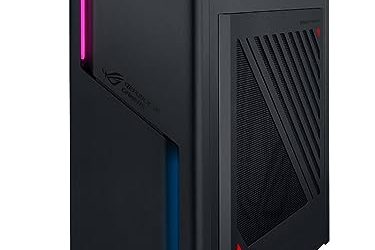
2. ASUS ROG NUC (2025)

The ASUS ROG NUC (2025) brings the newest platform in this comparison. Its listing specifies an Intel Core Ultra 9 275HX processor and an RTX 5070 Mobile graphics card with 8GB of memory, backed by 32GB of DDR5-6400 — the fastest memory specification published among these three desktops. For streaming, that combination means a current-generation CPU tier for running the broadcast stack, a current-generation mobile GPU for the game itself, and memory bandwidth that suits a machine juggling several applications at once.
ROG NUC models are built around the idea of a full gaming desktop compressed into a mini PC, and this one follows that pattern: 1TB of NVMe SSD storage for the game library and recordings, and a spec sheet aimed at players who would otherwise buy a mid-tower. It suits a streamer who wants the most recent hardware generation in the group and plans to keep the same desk setup for several years of titles, using the CPU headroom to keep the stream running while games get heavier.
Specs
- Form factor: Mini PC
- Processor: Intel Core Ultra 9 275HX
- Graphics: NVIDIA RTX 5070 Mobile, 8GB
- Memory: 32GB DDR5-6400
- Storage: 1TB NVMe SSD
See the ASUS ROG NUC (2025) on Amazon
3. ASUS ROG NUC 760

The ASUS ROG NUC 760 is the step-down option in the ROG NUC line, and its published specification reflects that honestly: an Intel Core Ultra 7 155H processor, an RTX 4060 with 8GB of GDDR6 graphics memory, and 16GB of DDR5. That is still a dedicated-GPU gaming desktop, and for the most-watched categories on streaming platforms — competitive shooters, MOBAs and other esports titles that are designed to run well on mainstream hardware — this tier of hardware is a sensible match between the game and the stream running on the same box.
You give up some multitasking headroom compared with the two 32GB models above: 16GB of memory is workable for a game plus streaming software, but it leaves less slack for extra applications, and the Core Ultra 7 sits a tier below the two flagship-class processors in this list. In return you keep the same 1TB SSD capacity and the same compact mini PC format. For a streamer whose channel is built around less demanding games, or who streams from a small desk where size matters more than maximum settings, the NUC 760 covers the brief without paying for headroom that would never be used.
Specs
- Form factor: Mini PC
- Processor: Intel Core Ultra 7 155H
- Graphics: NVIDIA RTX 4060, 8GB GDDR6
- Memory: 16GB DDR5
- Storage: 1TB SSD
See the ASUS ROG NUC 760 on Amazon
How to choose
Start with the processor, because streaming is a multitasking workload. Playing a game alone stresses the GPU; playing a game while broadcasting adds the streaming application, overlays, alerts, chat and often a browser — and that background load lands largely on the CPU and memory. That is why the two desktops here with flagship-class processors and 32GB of DDR5 are the safer picks for streamers who play demanding releases, while the Core Ultra 7 model with 16GB is better matched to lighter titles and leaner setups. In general terms, more CPU headroom and more RAM mean the stream stays smooth when the game hits its heaviest scenes.
Next, look at the graphics card tier in the same general way. All three picks use dedicated RTX graphics rather than integrated graphics, which is the baseline for a single-PC stream setup. The RTX 4070 in the AtomMan G7 Ti is a desktop-class card; the RTX 5070 Mobile and RTX 4060 in the two ASUS models are mobile-class parts, as their listings state. Higher GPU tiers buy higher in-game settings and frame rates at a given resolution, which gives the stream a better source image — but the right tier depends on what you actually play, and competitive titles need far less GPU than cinematic single-player games.
Then weigh the format itself. A small-form-factor desktop earns its place when desk space, portability or a clean on-camera background matters — a mini PC can sit behind a monitor, mount out of sight, or travel to an event far more easily than a tower. Storage is simple in this group: every pick publishes a 1TB SSD, which is a workable starting point for a rotating game library plus recordings, though streamers who archive everything will fill any single drive eventually. Finally, match the machine to your growth path: if you expect to add a capture card, a second PC or more production software later, the models with more CPU and memory headroom leave more room to grow.
Who should skip
Skip this entire category if you enjoy building and upgrading your own PC. Small-form-factor desktops are finished systems; the compact chassis that makes them attractive also means far less room for swapping components than a standard tower, so tinkerers are better served elsewhere. Skip them, too, if your streaming setup is built around a separate streaming PC — in that case the gaming machine does not need to carry the broadcast load, and this comparison’s priorities do not apply.
You should also skip the step-down model if you know your workload is heavy: streamers playing the most demanding new releases at high settings while running a full production stack should be looking at the 32GB models with the stronger processors, not the 16GB configuration. And if your desk has unlimited space and streaming is secondary to raw gaming performance per component, a conventional tower remains the more flexible route. These mini PCs are for people who value the compact format itself.
FAQ
Can one small PC really handle both gaming and streaming?
Yes, within the limits of its hardware tier. A single-PC setup asks the processor to run the game and the broadcasting software at the same time, which is why this comparison prioritises CPU headroom and memory alongside the graphics card. The two 32GB models here are specified for exactly that kind of multitasking; the 16GB model suits lighter games and leaner setups.
Why does the processor matter so much for streaming?
Because the game is only part of the workload. Streaming software, overlays, alerts, voice chat and browser dashboards all compete for CPU time and memory while you play. A higher-tier processor with more cores and more RAM keeps those background tasks from stealing resources at the worst moments — during the heaviest in-game scenes, when the stream is most likely to stutter.
Is 1TB of storage enough for a streaming PC?
For most streamers, it is a reasonable starting point: enough for a working library of installed games plus a buffer of recorded sessions. All three desktops in this comparison publish 1TB SSDs, so the choice between them does not turn on storage. If you archive every broadcast long-term, plan on external or secondary storage regardless of which desktop you buy.
What is the practical advantage of a mini PC on a stream desk?
Space and tidiness. A small-form-factor desktop can sit behind a monitor or on a shelf instead of occupying the floor or desk area a tower needs, which leaves room for the microphone, camera, lighting and second screen that a stream setup accumulates. It is also far easier to move between rooms or take to an event than a full-size tower.
Final verdict
For most streamers building a compact desk, the AtomMan G7 Ti is the strongest single pick here: the i9-14900HX and dedicated RTX 4070 give it the most combined headroom for playing and broadcasting from one small box, and 32GB of memory suits a full production stack. The ASUS ROG NUC (2025) is the pick for buyers who want the newest platform — its Core Ultra 9 processor, RTX 5070 Mobile graphics and DDR5-6400 memory make it the most current specification in the group. The ASUS ROG NUC 760 rounds out the list as the honest step-down: less CPU and memory headroom, but the same 1TB storage and compact format, well matched to esports-focused channels. Whichever you choose, the shared formula — dedicated RTX graphics, a high-tier processor and fast SSD storage in a mini PC chassis — is what makes a small-form-factor desktop work for game streaming.
Product and ASIN Reference
| Product | ASIN |
|---|---|
| AtomMan G7 Ti | B0DHYG646D |
| ASUS ROG NUC (2025) | B0FLBYKK6Q |
| ASUS ROG NUC 760 | B0DK86TS91 |