Key takeaways
- Find the best compact pellet stoves for small rooms, cabins and workshops. Compare heating coverage, hopper size, BTU output and venting before you buy.
The best compact pellet stoves solve a problem a full-size stove cannot: heating a small room, cabin, studio or workshop without giving up a large share of the floor. A compact pellet stove burns compressed wood pellets, feeds them automatically from a hopper, and delivers steady heat from a cabinet typically around 20 inches wide and 30 to 35 inches tall.
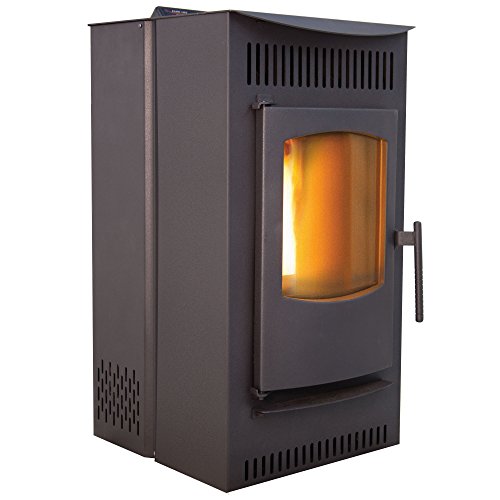

Quick answer: For most small spaces, the Castle Serenity 41278 is the strongest all-round pick, heating up to 1,500 square feet from a 40 lb hopper. For the smallest rooms, the Cleveland Iron Works PS20W covers 800 to 1,200 square feet with built-in WiFi. For longer burns, the PelPro PP70 pairs a compact 22-inch-square footprint with a 70 lb hopper and coverage up to 2,000 square feet.
One distinction is worth making up front. This site already covers cast iron pellet stoves with automatic ignition, a roundup organised around material and ignition type. This article is organised around size instead: the picks below are compact pellet stoves generally, chosen for a small footprint and for heating small spaces, and they include steel models that a cast-iron-only roundup excludes.
Quick Picks
| Stove | Best For | Heating Coverage | Hopper | Heat Output |
|---|---|---|---|---|
| Castle Serenity 41278 | Best overall compact pellet stove | Up to 1,500 sq ft | 40 lb | 32,000 BTU |
| Cleveland Iron Works PS20W | Smallest spaces and smart control | 800 to 1,200 sq ft | 24 lb | 28,423 BTU |
| PelPro PP70 | Longest burns from a compact footprint | Up to 2,000 sq ft | 70 lb | 42,500 BTU |
How to Choose the Best Compact Pellet Stoves
A compact pellet stove is a compromise by design: a small cabinet means a smaller hopper and a modest firebox. Match the stove to the room first and the feature list second.
1. Measure the Footprint, Not Just the Room
Start with a tape measure. A compact pellet stove still needs clearance to combustible walls and furniture, space in front for loading pellets and cleaning the ash pan, and room for the vent pipe. Measure the spot, then add the clearances in the installation manual: a stove 20 inches wide can easily need a 30-inch-wide alcove once clearances are counted.
Also check the path for carrying pellet bags, which usually weigh 40 lb each: a stove tucked behind furniture or up a narrow stair becomes a chore within a week. A corner placement often works well, because the vent can run straight out through the nearest exterior wall.
2. Match Heating Coverage to the Space, Not the Whole House
Heating coverage figures assume a reasonably insulated space in moderate winter conditions, so treat them as a guide. A stove rated for 1,500 square feet will heat an open-plan cabin of that size far more easily than a house of the same size divided into many small closed rooms, because pellet stoves rely on circulation to move warmth further.
For a single bedroom, studio or small living room, a stove covering 800 to 1,200 square feet is usually right. For an open-plan cabin, a room with high ceilings, or a workshop, look at 1,500 square feet and above. An oversized stove in a tiny room will cycle and overheat it; an undersized one will run flat out all day and still leave cold corners.
3. Hopper Size Decides How Often You Refill
The hopper is the fuel tank, and on a compact stove it is the first thing that shrinks. A 24 lb hopper holds a little over half a standard bag, so expect to top it up daily in cold weather. A 40 lb hopper holds a full bag and can run for up to 24 hours on a low setting, while a 70 lb hopper can stretch to around two days on moderate settings.
If you are home all day and do not mind a quick refill, a small hopper is a fair trade for a smaller cabinet. If the stove heats a weekend cabin, or a room you want to leave running overnight, a larger hopper is worth the extra inches. Check where the hopper lid sits too: a top-loading hopper is easy to fill, while one tucked behind the stove can be awkward with a heavy bag.
4. Heat Output and Efficiency
Heat output is stated in BTU per hour. The compact stoves here range from roughly 28,000 to 42,500 BTU, with higher output suiting larger or colder spaces. Efficiency matters just as much: it shows how much of the fuel’s energy becomes useful heat rather than going up the vent. The models below state efficiency in the region of 75% to 89%, typical for modern pellet stoves.
Pellet quality affects both figures in real use. Premium-grade pellets with low ash burn cleaner and leave less ash in the burn pot. Damp or dusty pellets reduce output and increase cleaning whatever the stated efficiency, so budget for dry indoor storage and clean the burn pot and ash pan on the manual’s schedule.
5. Controls, Thermostat and Smart Features
Most compact pellet stoves now offer more than a simple on-off switch. A programmable thermostat holds a set room temperature, a weekly schedule can warm the cabin before you arrive on a Friday evening, and an Eco mode can cycle the stove on and off to hold a temperature without burning pellets continuously. WiFi control, where fitted, lets you change settings from a phone, useful for a cabin or workshop you do not live in full time.
Do not let smart features distract from the basics. Check that the stove has automatic ignition, so it can start itself on a schedule. And remember that most electric pellet stoves need mains power for the auger, fan and igniter, so they stop heating in a power cut unless you have a battery backup or a generator.
6. Venting and Installation
Every pellet stove here needs proper venting, the part of the job most often underestimated. Pellet stoves use a dedicated pellet vent, usually 3-inch diameter pipe, running through an exterior wall or up through the roof. The vent route decides where the stove can sit, and a long or complicated run can cost more in time and parts than expected.
Check the manual for the maximum vent length, the bends allowed, and whether a fresh-air intake kit is required, especially in a tightly sealed cabin or a mobile home. Pellet stoves also need a hearth pad and the manufacturer’s stated clearances. If you are not confident about venting and clearances, get a qualified installer to do the work.
7. Noise, Cleaning and Daily Use
A pellet stove has moving parts, and moving parts make some noise: the fans produce a low hum and the auger makes a periodic sound as it turns. Most owners stop noticing it, but if the stove will sit in a bedroom or a quiet studio, look for models that state quiet blower technology and check where the blower outlet points.
Cleaning is a weekly job on most compact pellet stoves: empty the ash pan, scrape the burn pot, wipe the glass, and check the heat exchanger. Models built without tubes or hidden chambers are quicker to clean, because ash has fewer places to hide. A dirty pellet stove burns less efficiently and soots the glass faster.
The Best Compact Pellet Stoves Reviewed
1. Castle Serenity 41278 — Best Overall Compact Pellet Stove
The Castle Serenity 41278 is the best compact pellet stove here for most small spaces, balancing a genuinely small cabinet with a full-size feature set. It heats up to 1,500 square feet, delivers 32,000 BTU, and carries a 40 lb hopper that can run for up to 24 hours without a refill on a low setting.
The Smart Controller is the Serenity’s strongest feature, offering Manual, Thermostat, Weekly and Eco modes, so the stove can hold a set temperature, follow a weekly schedule, or cycle on and off in Eco mode. All modes can be programmed from the included remote control. The stove operates at greater than 75% efficiency and draws only 77 watts in normal operation at 120 volts.
Cleaning is simpler than on many rivals because the Serenity is built without tubes, corrugations or hidden chambers in the exhaust path. The alloy steel cabinet is finished in black, the stove weighs 186 lb, and the 40 lb hopper takes a full standard bag of pellets in one fill.
Two limits to note: 1,500 square feet is the stated maximum, so a large, draughty or poorly insulated space will test the stove on the coldest days. And like most electric pellet stoves, the Serenity needs mains power for its auger, fans and igniter, so it will not heat during a power cut without backup power. It also needs a scheduled truck delivery in many cases, so plan the delivery route into the room before ordering.
Heating coverage: Up to 1,500 sq ft
Hopper size: 40 lb
Heat output: 32,000 BTU
ASIN: B0C5NB5D95
Check on Amazon
2. Cleveland Iron Works PS20W — Best for the Smallest Spaces
The Cleveland Iron Works PS20W, sold as the Mr. Heater Cleveland Iron Works Small Pellet Stove, is the most space-efficient stove here. It heats 800 to 1,200 square feet, the right band for a single room, a small cabin, a studio or a workshop bay, and its cabinet measures about 20.27 inches wide by 34.25 inches tall by 22.04 inches deep.
Built-in WiFi is the PS20W’s headline feature: the stove can be controlled and scheduled remotely, useful for warming a cabin before arrival. It delivers 28,423 BTU and uses Whisper Quiet Blower Technology, a welcome detail when the stove sits close to where people sit or sleep. The cast iron construction gives the cabinet a solid feel, and the stove is EPA approved.
The trade-off is the hopper. At 24 lb it holds a little over half a standard bag of pellets, so in cold weather you should expect to refill it daily, and the manual’s own figures show a smaller usable capacity than the headline figure on some variants, so check the exact listing you buy. That is a partial fit worth weighing: the PS20W is the best choice here for a truly small space, but it asks the most of its owner in refills.
The PS20W still needs mains power, proper 3-inch pellet venting and the clearances in its manual, and its 800 to 1,200 square foot coverage means it is not the pick for an open-plan space beyond that band. For a single small room, though, its compact size, WiFi control and quiet blower are hard to beat.
Heating coverage: 800 to 1,200 sq ft
Hopper size: 24 lb
Heat output: 28,423 BTU
ASIN: B07MY6TKF8
Check on Amazon
3. PelPro PP70 — Best for Long Burns From a Compact Footprint
The PelPro PP70 is the partial-fit pick here: it pairs a compact footprint with a much larger hopper than the other stoves. The cabinet measures 22 inches wide by 33 inches high by 22 inches deep, so its floor area is only a little larger than the PS20W, yet it carries a 70 lb hopper and heats up to 2,000 square feet at up to 42,500 BTU. That makes it the best compact pellet stove for an open-plan small home, a large cabin, or a workshop where you want long intervals between refills.
A 70 lb hopper can provide up to two days of fuel on moderate settings, according to the manufacturer, a real advantage if the stove runs overnight or over a weekend. The PP70 is EPA certified at 89% efficiency, with a built-in dial thermostat, a variable speed blower, and a 300-watt auto-igniter. A fresh air kit is included, and the stove is listed for mobile home use with that kit fitted.
The partial fit is coverage. With heating for up to 2,000 square feet and 42,500 BTU, the PP70 is at the large end of what can honestly be called compact, and it will be too much stove for a single small bedroom, where it would cycle and overheat the room. Buy it for the open-plan small home or workshop it is sized for, not for a tiny room. It ships assembled and bolted to a pallet, so delivery needs planning, and it needs mains power like the other electric models here.
Heating coverage: Up to 2,000 sq ft
Hopper size: 70 lb
Heat output: 42,500 BTU
ASIN: B0BN4N7WWJ
Check on Amazon
What to Check Before You Buy
Before ordering, work through this short checklist. It takes an hour and prevents the most common mistakes.
First, confirm the vent route. Identify the exterior wall or roof the vent will use, measure the run, count the bends, and check the manual’s limits. If the only route is long or has several bends, ask an installer before buying.
Second, check the electrical supply. Most compact pellet stoves need a standard 120-volt outlet nearby, and the igniter draws more power at start-up than during normal running. If heating during outages matters, plan a battery backup or generator now, or consider a non-electric gravity-feed stove instead, accepting manual lighting and less automatic control.
Third, confirm floor protection and clearances. Buy or build the hearth pad the manual requires, and mark out the clearances to walls, furniture and curtains on the floor with tape before the stove arrives.
Fourth, plan pellet supply and storage. A compact stove still burns through bags of pellets steadily in winter, so find a local supplier, check that the pellets are premium grade with low ash, and keep them dry indoors.
Fifth, check delivery. Pellet stoves are heavy, freight-sized items, so confirm whether delivery is kerbside or into the room, whether an appointment is needed, and whether you need help moving the stove to its final spot. Finally, check local rules: some areas restrict pellet stove installations, require a permit, or set rules for mobile homes and rented properties.
FAQ
What size pellet stove do I need for a small room?
For a single bedroom, studio or small living room, look for a stove covering 800 to 1,200 square feet, such as the Cleveland Iron Works PS20W. For an open-plan cabin or a room with high ceilings, move up to a stove covering up to 1,500 square feet, such as the Castle Serenity 41278. Stated coverage assumes reasonable insulation and moderate winter conditions.
How long does a compact pellet stove run on one hopper fill?
It depends on the hopper size and the heat setting. A 24 lb hopper may need refilling daily in cold weather, a 40 lb hopper can run for up to 24 hours on a low setting, and a 70 lb hopper can stretch to around two days on moderate settings. Running the stove hard on the coldest days shortens every one of those figures.
Do compact pellet stoves need electricity?
Most do. Electric pellet stoves use mains power for the auger, combustion fan, room blower and automatic igniter, so they stop heating in a power cut unless you have battery backup or a generator. Non-electric gravity-feed pellet stoves keep heating without power, but they need manual lighting with a torch and offer little automatic control.
Can a pellet stove heat a whole small house?
A compact pellet stove can heat a small, open-plan house or cabin, especially one with good insulation and a layout that lets warm air circulate. It is less effective in a house divided into many small closed rooms, because the heat stays near the stove. For a multi-room house, use it as the main heat source for the living area, or as a zone heater.
How often do I need to clean a compact pellet stove?
Plan on a short clean at least once a week during the heating season: empty the ash pan, scrape the burn pot, wipe the glass and check the heat exchanger. Compact stoves have smaller ash pans, so they fill faster than large stoves. Always let the stove cool fully before cleaning, and dispose of ash only in a metal container kept away from combustible material.
Bottom Line
The best compact pellet stoves prove that a small cabinet can still heat a small space properly, provided the stove is matched to the room. For most buyers, the Castle Serenity 41278 is the best all-round choice, with up to 1,500 square feet of coverage, a 40 lb hopper and a Smart Controller. The Cleveland Iron Works PS20W is the pick for the smallest rooms, with the narrowest footprint and WiFi control, as long as you accept daily refills from its 24 lb hopper. The PelPro PP70 is the pick for longer burns, pairing a compact 22-inch-square footprint with a 70 lb hopper and coverage up to 2,000 square feet.
Whichever model you choose, measure the spot, plan the vent route, confirm the power supply and the delivery, and buy pellets from a supplier you can rely on through winter.
Disclosure: As an Amazon Associate, we may earn from qualifying purchases.